Industry Applications

Public Safety & Security Drones

Launch in under 2 minutes. Thermal imaging in total darkness. Live video to command. Real deployments from 60,000-person festivals to 878-flight protest response operations.

2-3 min
Launch time vs 12+ min ground units
878
Flights in 11 days, Fort Wayne PD
60,000
Attendees monitored, Boardmasters UK
99%
Uptime for autonomous patrol systems

Real-world stories and what actually made them work

These aren't theoretical use cases—they're actual deployments with documented results. Each story shows the challenge, the solution, and measurable outcomes from police, fire, and security teams worldwide.

Boardmasters Festival, UK • 2024

60,000 attendees, 5-day coastal festival, zero major incidents
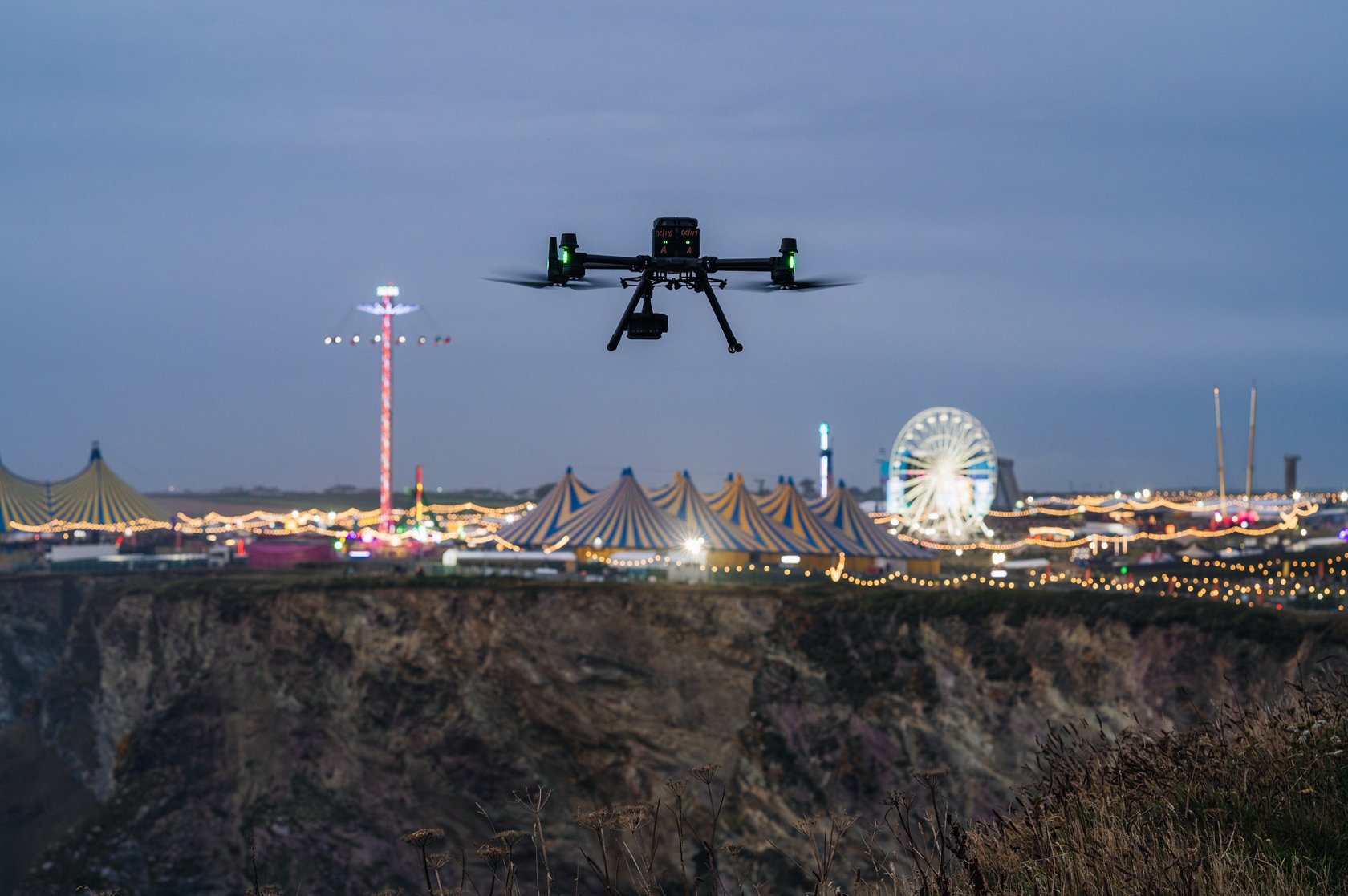
DJI Matrice 350 RTK with Zenmuse H30T at Boardmasters Festival

Challenge

5-day music festival, sprawling coastal site by the coast, tens of thousands of people. CCTV and ground patrols left blind spots in crowd density, traffic flow, incident detection.

Devon & Cornwall Police Solution

DJI Matrice 350 RTK + Zenmuse H30T
• 48MP wide-angle + 200x zoom + thermal + night-vision + laser rangefinder
• Live-streamed to command center and organizers on big screens
• Flew from high vantage point covering entire venue
• After dark: thermal and starlight night-vision modes active

Results

"Invaluable tool" per Devon & Cornwall Police. Traffic bottlenecks identified proactively. Crowd congestion spotted early, security redirected attendees. Minor incidents detected before escalation. Sgt. Chris Linzey: "we can see a large area from a single location and direct units" — provided a strategic advantage. Producer Sam Watkins: "helped us see problems evolve ahead of time."

Tech Stack

  • • Matrice 350 RTK (all-weather, high payload capacity)
  • • H30T multi-sensor (day/thermal/zoom/night-vision)
  • • Live video feed to command + organizers
  • • Laser rangefinder for precise distance measurement
60,000
Attendees monitored
5 days
Continuous event footprint coverage
200×
Zoom for stand-off observation

What SkyFlow can provide for the same outcome

SkyFlow can help security teams choose rules-of-use that stay safety-first, then train staff on night operations, scene lighting discipline, and how to coordinate the drone operator with the event command post.

📖 Read Full Story: Technical Details & Implementation

Location: Watergate Bay, Cornwall, UK (coastal festival site)
Duration: 5 days (August 2024)
Attendees: 60,000 people across multiple stages and camping areas

Technical Approach: Flying from a high vantage point near the festival, the M350 RTK live-streamed aerial footage directly to the event command center and organizers. The wide-angle lens provided an overview of crowd movements and traffic, while the 200x zoom camera allowed operators to focus on individual incidents or disturbances from a safe distance. After dark, the H30T's thermal and starlight night-vision modes activated, spotting heat signatures and activity in low-light conditions. The drone's feed was displayed on big screens for decision-makers, and its laser rangefinder could pinpoint distances for units on the ground.

Operational Outcomes: As Sergeant Chris Linzey of the drone unit noted, with the drone "we can see a large area of the festival footprint from a single location and then use that imagery to direct units"—provided a "strategic advantage" in keeping the event safe. Festival producer Sam Watkins said the drone's live feed helped them "move around stewarding and security, and see problems evolve ahead of time." The result was a smoother, safer festival with no major incidents, validating the use of DJI drones as force multipliers for event security.
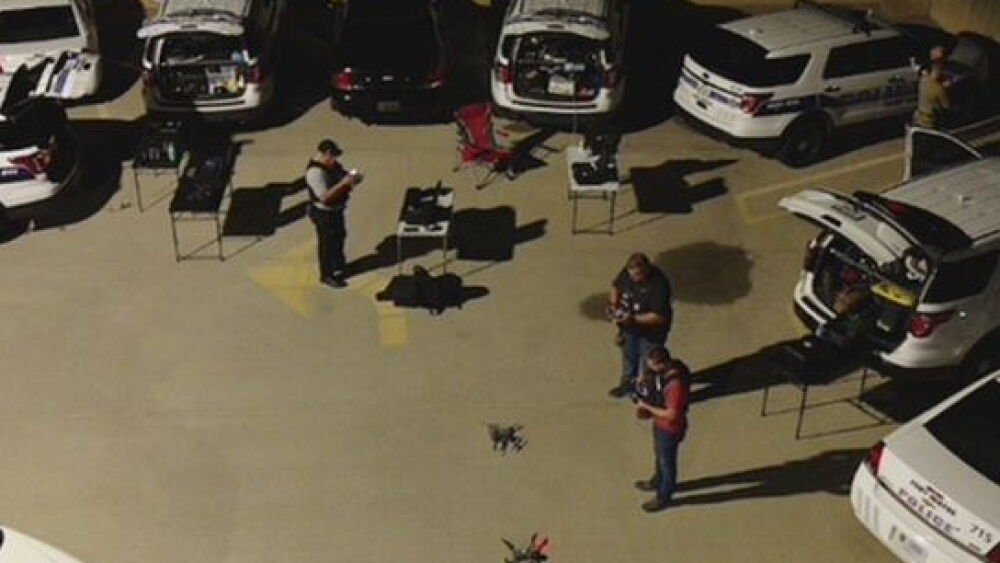
Fort Wayne PD, USA • 2020

878 flights in 11 days: Managing weeks of civil unrest with continuous aerial overwatch

Fort Wayne Police Department drones helped identify supply routes and warn officers

Challenge

Dynamic crowds over wide downtown area. Potential for violence, property damage. Tracking crowd size, movement, locating agitators in real time was impossible with ground units. Officer safety at risk in dense crowds.

Fort Wayne Air Support Unit

Up to 5x DJI Mavic 2 Enterprise Dual (4K visual + thermal)
878 flights, 153 flight hours, 11 days
• Loudspeaker for dispersal announcements from ~200 feet
• Spotlight for night illumination of alleyways, rooftops, parking lots
• DroneSense software for live video streaming to command center
• 12-hour continuous missions during first weekend unrest

Results

Identified protester supply routes and movement patterns. Tracked crowd size in real-time for resource allocation. Warned officers on front lines when hostile actors approached. Loudspeaker played lawful dispersal message before police action. Zero serious injuries reported during chaotic conditions. Thermal spotted people hiding in dark areas behind objects. Media crews invited to command center for transparency.

153 hrs
Total flight time over 11 days
5 drones
Flown simultaneously for coverage
~200 ft
Altitude for crowd tracking

Tech Stack

  • • Mavic 2 Enterprise Dual (visual + thermal)
  • • Loudspeaker attachment (public address)
  • • Spotlight + beacon (night ops)
  • • DroneSense (live streaming to command)

What SkyFlow can provide

SkyFlow can configure multi-drone operations, train teams on crowd monitoring techniques, and help establish policies for loudspeaker use and public communication that balance public safety with community trust.

📖 Read Full Story: 11 Days of Continuous Aerial Overwatch

Context: During weeks of protests following national events in 2020, Fort Wayne Police Department faced dynamic crowds over a wide downtown area, with potential for violence, property damage, or clashes. Monitoring crowd size, movement, and locating agitators in real time was extremely difficult with ground units alone. Officer safety was also a major concern in the dense crowds.

Technical Approach: Over an 11-day period, FWPD flew up to 5 drones simultaneously, accumulating 878 flights and 153 flight hours to maintain an unbroken eye in the sky. From ~200 feet above, the drones tracked protester movements across the city. Commanders could observe crowd size and shifts, detecting if groups were growing or dispersing. Using the zoom and thermal cameras, operators identified potential instigators hiding within crowds and even spotted "spotter" individuals relaying police positions to protesters. On one volatile night, the team used a Mavic 2 Enterprise's loudspeaker to play a pre-recorded dispersal message when an assembly was declared unlawful—giving everyone a chance to leave before police took action. At night, the drones' thermal imagery helped locate people in dark areas or behind objects, and the spotlight attachment lit up alleyways, rooftops, and parking lots where officers on the ground had limited visibility.

Results & Impact: FWPD credits the drones with helping "identify the supply routes protesters were using" and track where crowds were headed. This allowed police to pre-position resources and prevent surprise flashpoints. Drones also "warned officers on the front lines" when hostile actors were approaching, enhancing officer safety. During the first weekend of unrest, FWPD drones flew 12-hour continuous missions that helped quell violence and guided officers, with no serious injuries reported amid chaotic conditions. Media crews were invited to join the drone command center, and a local news station's pilot even coordinated flights with police—boosting transparency and community trust.

Read Fort Wayne PD Case Study
24-7 Drone Force, South Africa

1,200+ automated patrol flights, 99% uptime: Drone-in-a-box security for residential estates

24-7 Drone Force command center monitoring autonomous drone operations

Challenge

Securing extensive perimeters at night—industrial parks, estates, infrastructure. Fixed cameras have blind spots. Foot/vehicle patrols are slow. Intruders hide in shadows where guards can't see. Security personnel at greater risk during nighttime confrontations.

24-7 Drone Force Solution

DJI Matrice 30T + DJI Dock (autonomous)
30 sec launch on alarm trigger or scheduled patrol
• Thermal camera detects heat signatures in total darkness
• AI auto-tracks intruders, alerts operators at central command
• Beyond Visual Line of Sight (BVLOS) via FlightHub/FlytBase
• Auto-returns to dock to recharge after each mission

Results

99% system uptime. 1,200+ patrol flights in first phase covering extensive estates nightly. Faster response, greater coverage vs traditional methods. Reduced false alarms(drones verify before alerting). Cost savings by reducing roving guards. Caught thieves on dark rooftops via thermal. Detected smuggling attempt 18 hrs before scheduled human patrol. Guards respond with tactical advantage (know intruder count, exact position, whether armed).

99%
System uptime
1,200+
Patrol flights (first phase)
30 sec
Launch time on alarm

Tech Stack

  • • DJI Matrice 30T (all-weather, thermal)
  • • DJI Dock (autonomous charging station)
  • • FlytBase/FlightHub (central management)
  • • AI intruder detection + auto-tracking

What SkyFlow can provide

SkyFlow can help plan autonomous patrol systems, configure DJI Dock integration, and train teams on thermal monitoring techniques and alarm response protocols for 24/7 operations.

📖 Read Full Story: Autonomous Drone-in-a-Box Security Operations

Context: Securing extensive perimeters such as industrial parks, residential estates, or critical infrastructure at night is difficult for human guards—visibility is low, and intruders or hazards might not be noticed until it's too late. Fixed cameras have blind spots, and patrolling on foot or by vehicle is slow. Security personnel are also at greater risk during nighttime confrontations.

Solution Architecture: 24-7 Drone Force in South Africa integrated DJI Matrice drones with DJI Dock stations on client properties to enable round-the-clock automated patrols. These drones (secured in weather-proof charging docks) can take off on a schedule or instantly when an alarm is triggered, using theirthermal cameras and AI to investigate the scene. Through platforms like DJI FlightHub or FlytBase, multiple drones can be centrally managed and even operate Beyond Visual Line of Sight (BVLOS), covering large properties without direct pilot control on-site.

Technical Implementation: On a protected site, DJI Dock stations are placed to cover different zones. At night, drones launch on pre-programmed patrol routes skimming 50–100 meters above the perimeter, scanning for any heat signatures or movement. The thermal camera highlights a human or vehicle as a bright blob even in total darkness. If an intruder is detected, the system's AI flags it and auto-tracks the target, while alerting security operators at the command center. The operator can then take manual control, use the drone's spotlight to flash a warning, or even issue a spoken warning via loudspeaker. In a real-world case, a remote desert facility's autonomous drone launched within 30 seconds of a perimeter alarm and intercepted two intruders in the dead of night—thermal images captured them, causing the suspects to flee before they could reach the facility.

Results & Impact: The South African security firm achieved 99% system uptime and performed over 1,200 patrol flights in the first phase of deployment, covering extensive residential estates nightly with minimal human intervention. This resulted in faster response times, greater coverage, and improved threat detection compared to traditional methods. By centralizing drone operations, the company reduced the need for dozens of roving guards and cut false alarms (since drones verify triggers before alerting on-site teams)—leading to significant cost savings for clients alongside better security. Thermal drones have caught intruders that evaded other sensors: spotting thieves hiding on dark rooftops, detecting a group attempting midnight cable theft by seeing their footprints in grass via residual heat, and identifying "suspicious thermal activity" 18 hours before a scheduled human patrol would have passed by, enabling an intervention that prevented a cross-border smuggling attempt.

Read 24-7 Drone Force Case Study
StormPoint SAR Volunteers

Disaster search and rescue: Volunteers transform capability with thermal + mapping

Challenge

Disasters expand search area quickly. Volunteers cannot cover terrain efficiently under time pressure and poor visibility. Pre-drone: slow coverage, fatigue, choosing between speed and thoroughness. Missing persons harder to locate in vast search areas.

StormPoint Solution

DJI Enterprise drones with thermal + mapping
• Thermal scanning identifies where ground teams should focus effort
• Overhead mapping tracks what has already been searched
• Standardized kits for sustainability without full-time staff
• Training ladder for pilot continuity
• Simple mission checklists reduce cognitive load under stress

Results

Faster area coverage and better prioritization of ground search efforts. Thermal helps locate individuals in low-light and challenging terrain. Grid logging ensures no areas are missed. Battery rotation discipline maintains continuous ops. Volunteers can sustain multi-day operations with standardized procedures.

Tech Stack

  • • Thermal-capable aircraft for low-light ops
  • • Standard search patterns + grid logging
  • • Battery rotation discipline
  • • Mission checklists for stress reduction
Thermal
Low-light / night confirmation
Mapping
Grid logging + coverage tracking
SOPs
Repeatable volunteer operations

What SkyFlow can provide

SkyFlow can build a deployable SAR kit, train teams on thermal search technique, and help you write simple operational procedures so that new pilots can onboard without chaos.

📖 Read Full Story: Volunteer SAR Program Transformation

Organization: StormPoint is a volunteer search and rescue organization that responds to disaster situations globally. Their core problem was that disasters expand the search area quickly, and volunteers cannot cover terrain efficiently, especially under time pressure and poor visibility. The pre-drone challenge was slow coverage and fatigue, plus the reality that teams often have to choose between speed and thoroughness.

Adoption Challenge: The drone adoption challenge in volunteer contexts is usually sustainability. Batteries, maintenance, pilot training continuity, and mission logging all have to be handled without a full-time staff. StormPoint solved this with standardized kits, a training ladder, and simple mission checklists that reduce cognitive load under stress. This approach allows new volunteers to onboard systematically rather than learning on-the-fly during high-pressure missions.

Operational Implementation: DJI enterprise drones equipped with thermal capabilities and mapping software became the foundation of their SAR operations. Thermal scanning helps identify where ground teams should focus effort by detecting heat signatures of missing persons even in dense foliage or low-light conditions. Overhead mapping helps track what has already been searched, preventing duplicate coverage and ensuring systematic grid coverage. Battery rotation discipline maintains continuous operations during multi-day search missions.

Impact: The outcome is faster area coverage and better prioritization. Thermal helps locate individuals in low-light and challenging terrain that would take ground teams hours to search. Grid logging ensures no areas are missed. Volunteers can sustain multi-day operations with standardized procedures, making the program repeatable and scalable as new volunteers join the organization.

Read StormPoint Case Study
Bentonville Fire Department, USA

Industrial hazard response: Thermal keeps firefighters out of danger zones

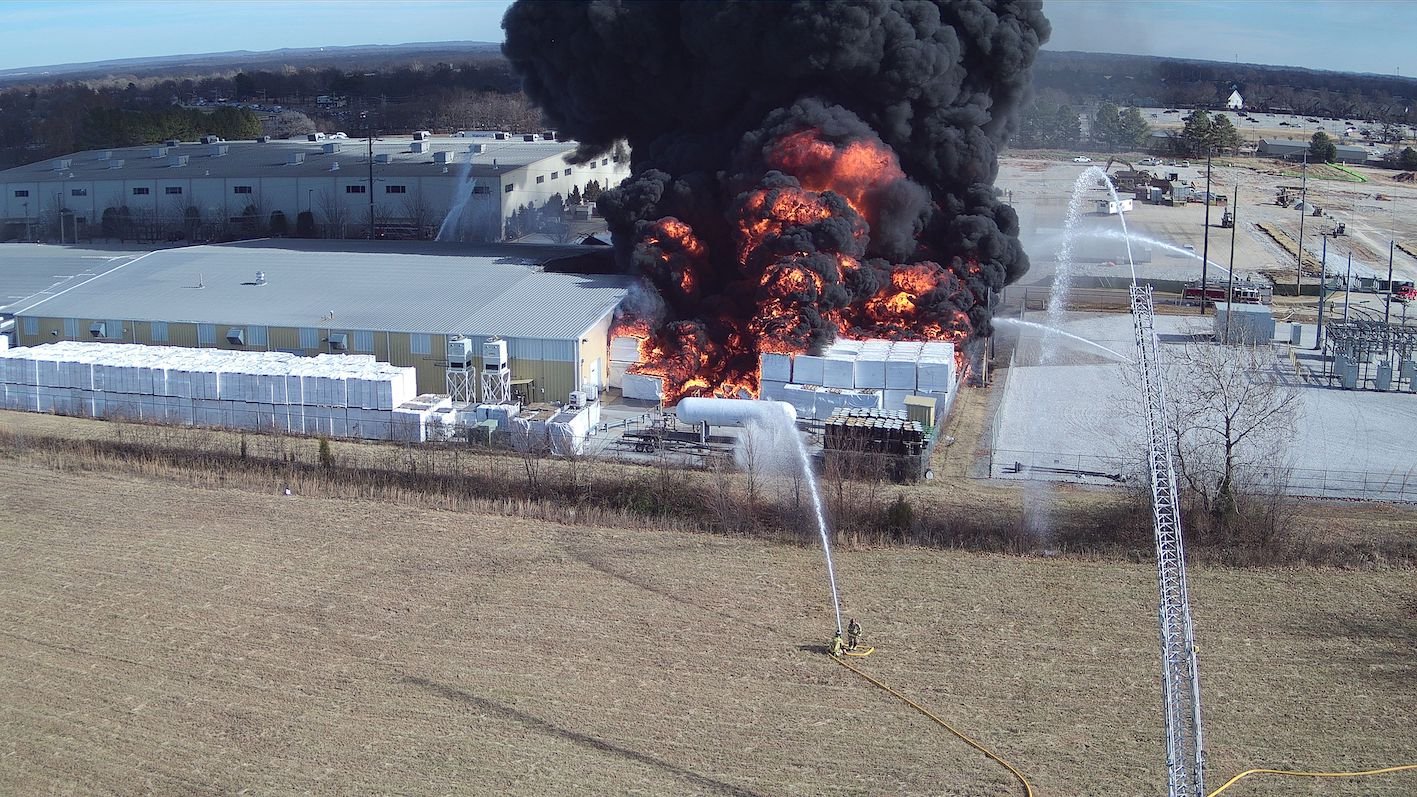
Drone overhead view of industrial fire in Bentonville, Arkansas

Challenge

Industrial incidents: hazard often invisible from ground, conditions change quickly. Before drones, responders either guessed, waited longer for information, or approached areas that might have been unsafe. High risk to personnel safety.

Bentonville FD Solution

DJI thermal drones for situational awareness
• Monitor hot spots without entering danger zones
• Thermal imagery with high enough resolution to interpret risk areas
• Confirms whether zone is safe for ground teams to enter
• Drone operator integrated into incident command rhythm
• Defined handoff from drone operator to command decisions

Results

Improved situational awareness. Safer decision-making—thermal supports monitoring dangerous conditions without exposing firefighters. Clear handoff protocols between drone operator and command. Post-incident documentation workflow for review and training. Enhanced personnel safety during industrial hazard assessment.

Tech Stack

  • • Thermal imaging (high resolution for interpretation)
  • • Defined handoff to command decisions
  • • Post-incident documentation workflow
  • • Safe standoff operation procedures
Thermal
Hotspot detection without entry
Standoff
Keep crews out of hazard zones
IC-ready
Drone feed integrated into command

What SkyFlow can provide

SkyFlow can help you choose a thermal platform that matches your incident types, then deliver scenario-based training for industrial hazard assessment, including safe standoff operation and thermal interpretation basics.

📖 Read Full Story: Fire Department Thermal Operations

Context: Bentonville Fire Department in Arkansas faced a common challenge in industrial hazard response: the hazard is often invisible from the ground, and conditions can change quickly. Before drones, responders either guessed about conditions, waited longer for information to trickle in, or approached areas that might have been unsafe. This presented high risk to personnel safety during chemical spills, structural fires, gas leaks, and other industrial incidents.

Integration Challenge: When adopting drones, a common challenge is integrating the drone operator into the incident command rhythm. Bentonville FD solved this by treating the drone feed like another sensor input, with clear rules for who watches it and who is allowed to request flight repositioning. The drone operator became part of the incident command structure rather than a separate unit.

Operational Use: DJI thermal drones provide situational awareness by monitoring hot spots without requiring firefighters to enter danger zones. Thermal imagery with high enough resolution allows incident commanders to interpret risk areas—identifying hotspots in structures, detecting gas leaks via temperature differentials, and confirming whether a zone is safe enough for ground teams to enter. The defined handoff from drone operator to command decisions ensures tactical information flows efficiently during time-critical incidents.

Safety Impact: The outcome is safer decision-making and improved situational awareness. Thermal supports monitoring dangerous conditions without exposing firefighters to unnecessary risk. Clear handoff protocols between drone operator and command enable rapid tactical adjustments. Post-incident documentation workflows provide video records for review, training, and investigation purposes. The drones fundamentally changed how Bentonville FD assesses industrial hazards, keeping responders out of danger while maintaining operational effectiveness.

Read Bentonville FD Case Study

The public-safety technology stack

A typical public safety drone deployment combines multiple layers working together. Understanding this stack helps agencies plan deployments that scale cleanly and integrate with existing incident command structures.

Aircraft Level

Teams choose between compact thermal drones for rapid response and larger platforms for longer endurance, stronger wind tolerance, and multi-payload flexibility. Thermal imaging is often the difference between "searching" and "confirming" at night, during smoke, or across large areas.

Workflow Level

Agencies standardize how they launch, how they hand off the live feed, who is authorized to pilot, and how they retain or delete footage. This is where many programs either scale cleanly or stall out. Mature programs have clear SOPs, launch criteria, and post-flight logging procedures.

Governance Level

Teams formalize privacy boundaries, flight-area rules, and documentation practices, especially when operations become routine or frequent. This includes policies on when recording is justified, data retention periods, and who has access to footage.

Mission-to-platform chart (quick guide)

Different public safety missions have different requirements. This table helps match mission types to the most appropriate DJI platforms based on real-world deployments.

Mission typeWhat matters mostTypical best-fit platformWhy it fitsWhen to step up
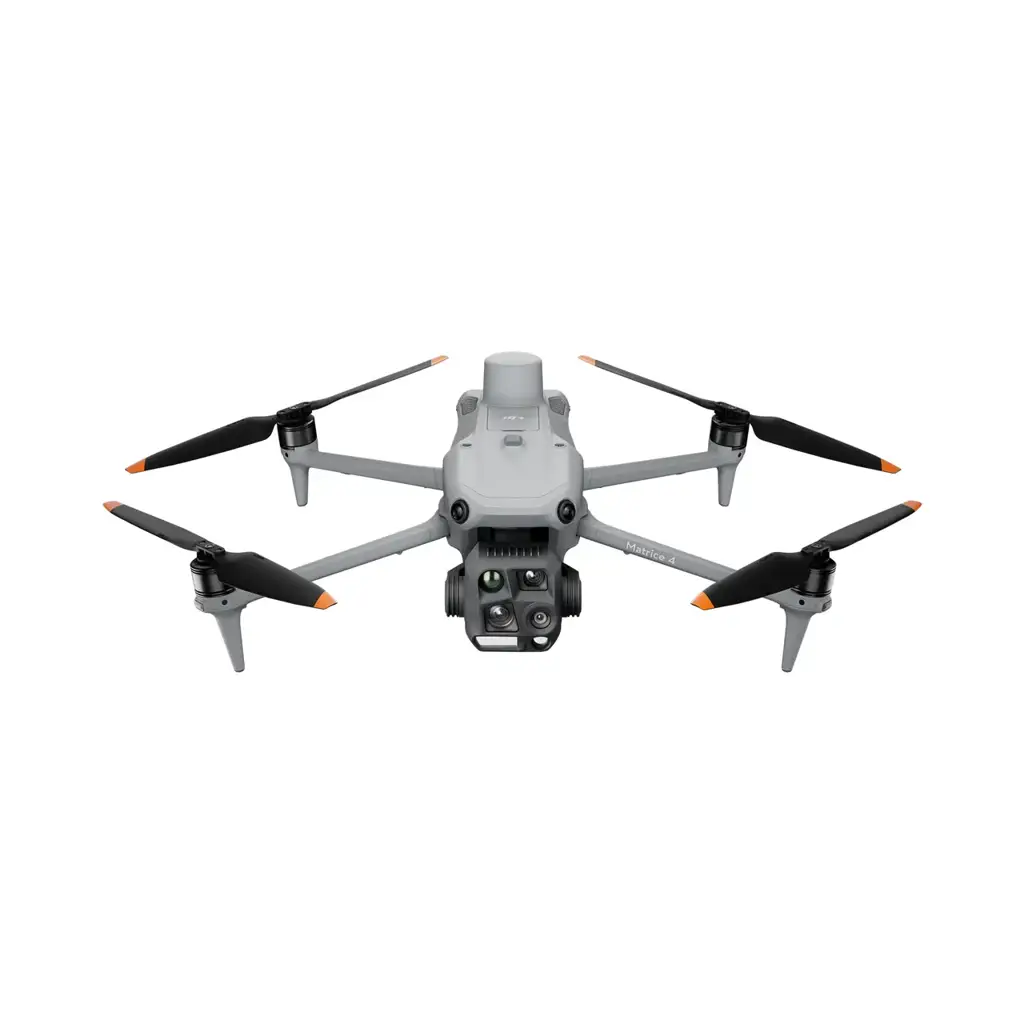
Rapid response, patrol support, thermal confirmationSpeed, portability, thermal, simple trainingDJI Matrice 4T ThermalFast deployment, strong day + thermal package in a compact footprintIf you need heavier sensors, longer time on station, or more wind margin
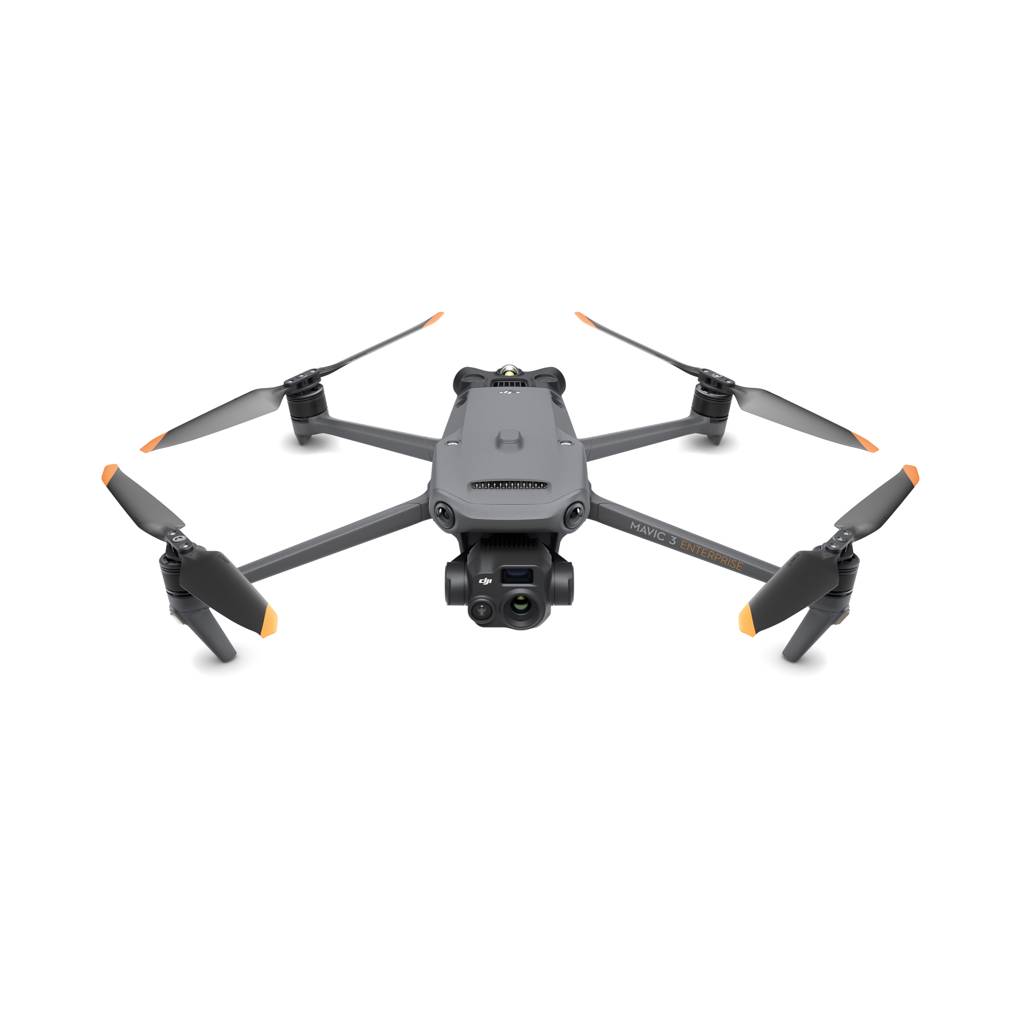
Small-team thermal search and scene overviewCompact kit, thermal, lower total costDJI Mavic 3T ThermalOne-person kit, quick launch, strong valueIf you need multi-payload or specialist sensors
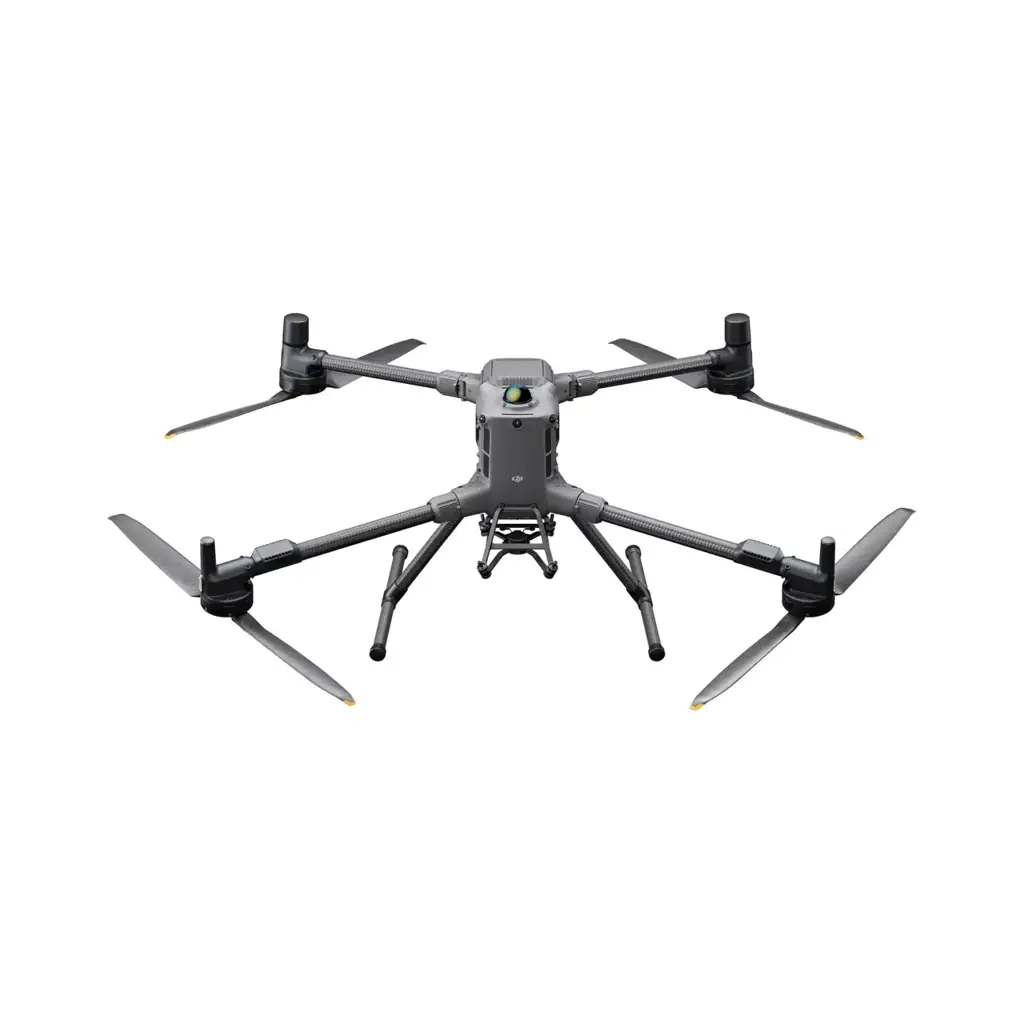
Command-level overwatch, multi-payload missionsEndurance, payload flexibility, stronger performance envelopeDJI Matrice 400Built for enterprise payloads and long missionsIf you must carry specialist payloads like LiDAR or larger optics
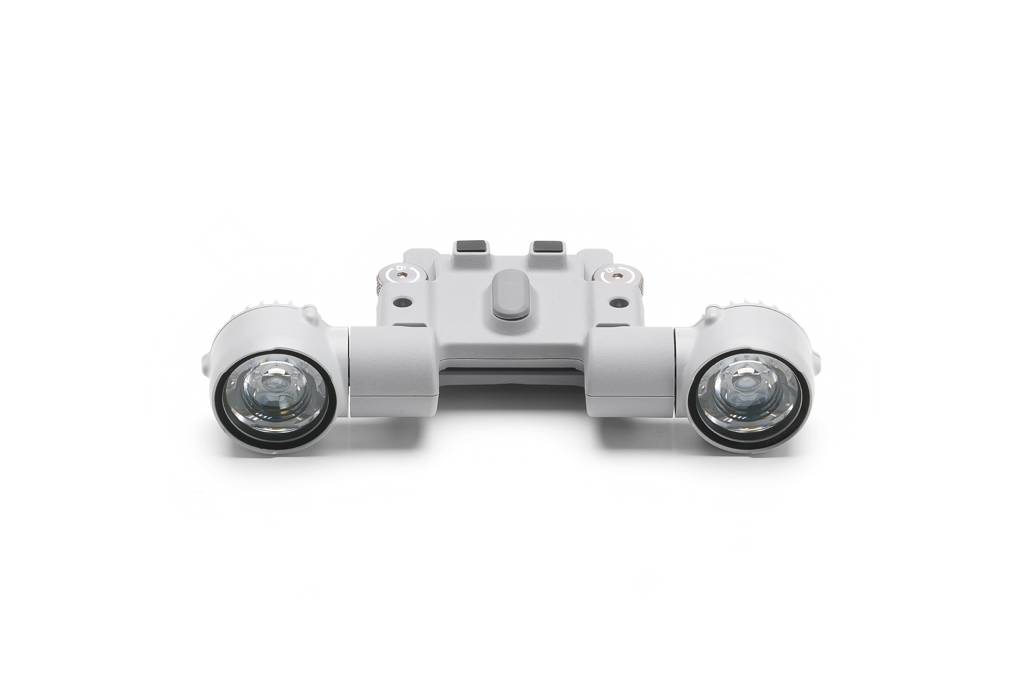
Crowd management at night, public messagingLighting, loudspeaker, thermalMatrice 4T + AL1 + AS1Adds non-lethal "see and communicate" tools for safe operationsIf you need multi-team ops with heavier sensor suites
Large-scale event security (festivals, stadiums)Multi-sensor capability, zoom, thermal, enduranceMatrice 350 RTK / 400200x zoom, thermal, wide-angle all in one system. All-weather operationFor multi-day events or when multiple simultaneous feeds are needed
Autonomous 24/7 perimeter patrolAutomation, BVLOS capability, dock integrationMatrice 30T + DJI Dock30-sec launch on alarm, autonomous charging, 99% uptimeFor very large properties requiring multiple dock stations

What SkyFlow offers public safety teams

SkyFlow is positioned to support a public safety drone program end-to-end, including procurement, onboarding, and sustainment. That means you can start with a small thermal kit and scale to a larger fleet once the program proves value.

Hardware Supply & Kitting

Start with the right batteries, controllers, and payloads so the program launches smoothly.

Operational Training

Training tied to real dispatch patterns and incident workflows, not just flight maneuvers.

Program Rollout Guidance

Checklists, maintenance cadence, and documentation templates to scale your program.

FAQ

How fast can a drone launch during an incident?
Under 2 minutes for thermal drones (Matrice 4T, Mavic 3T). Autonomous systems: 30 seconds on alarm trigger.
What about privacy and data retention?
Mature programs: published policies, defined mission categories, documented deployments. Record only when justified, delete non-evidentiary footage within set timeframe.
Do I need special flight authorizations?
DFR programs typically need BVLOS approval. Canada: SFOC or exemptions. USA: Part 107 waivers or COA. SkyFlow helps navigate regulatory requirements.
What training is required?
Regulatory cert (Canadian Advanced or US Part 107) + operational training: night ops, thermal interpretation, incident coordination, documentation. SkyFlow provides scenario-based training.

References & Additional Resources

Ready to launch your public safety drone program?

Whether you're starting from scratch or scaling an existing program, SkyFlow provides the hardware, training, and operational support you need.

Location
Richmond Hill, Ontario, Canada