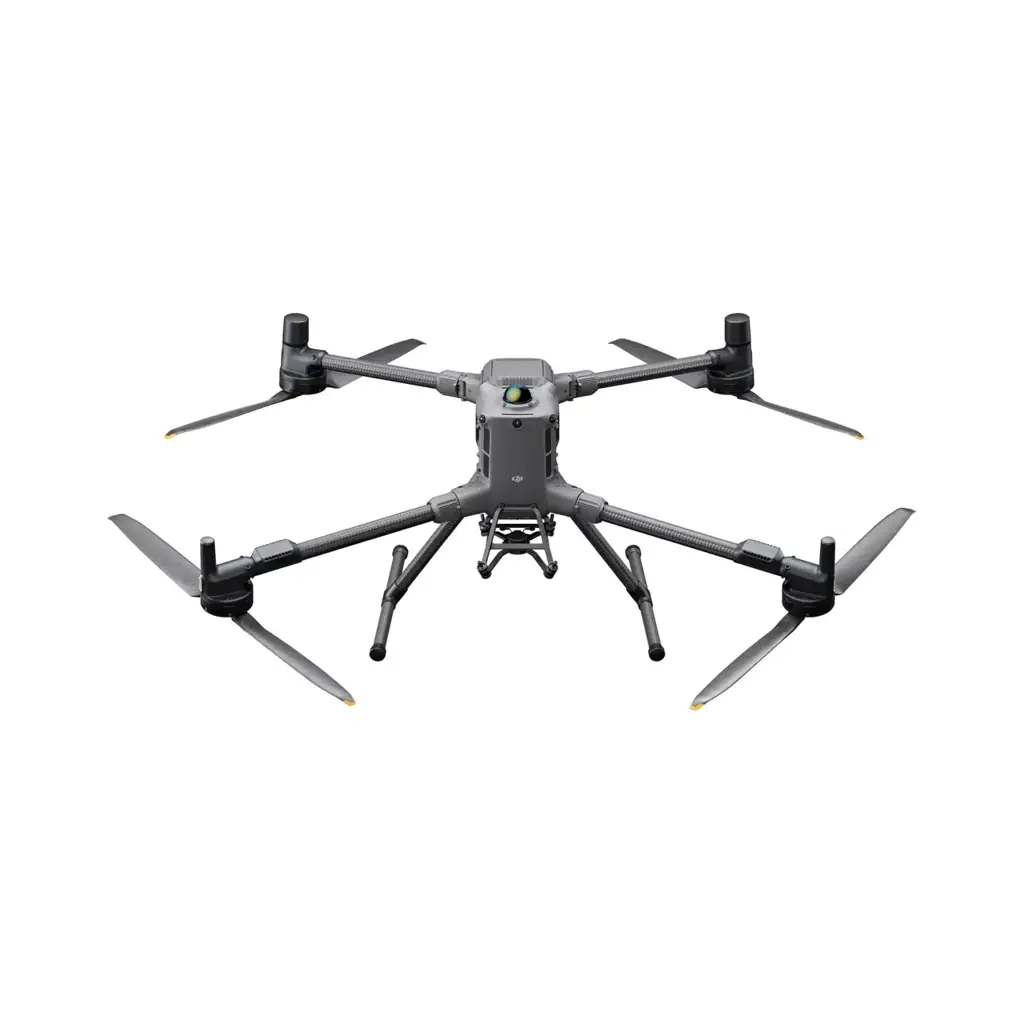
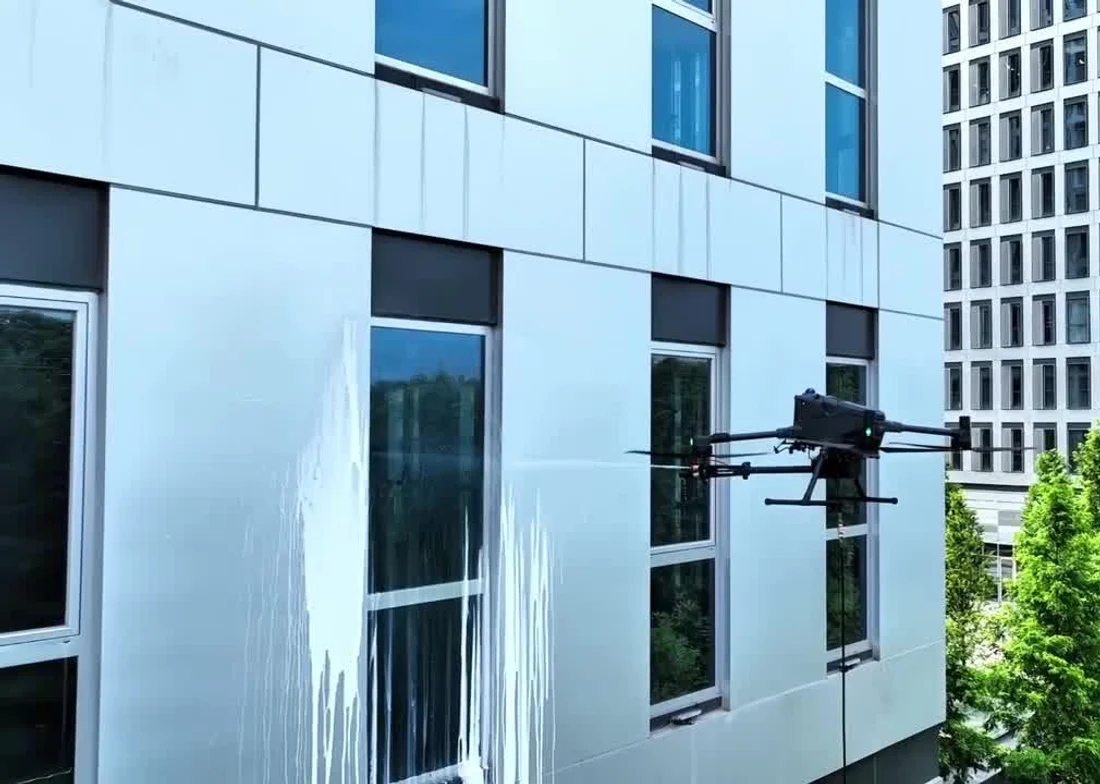
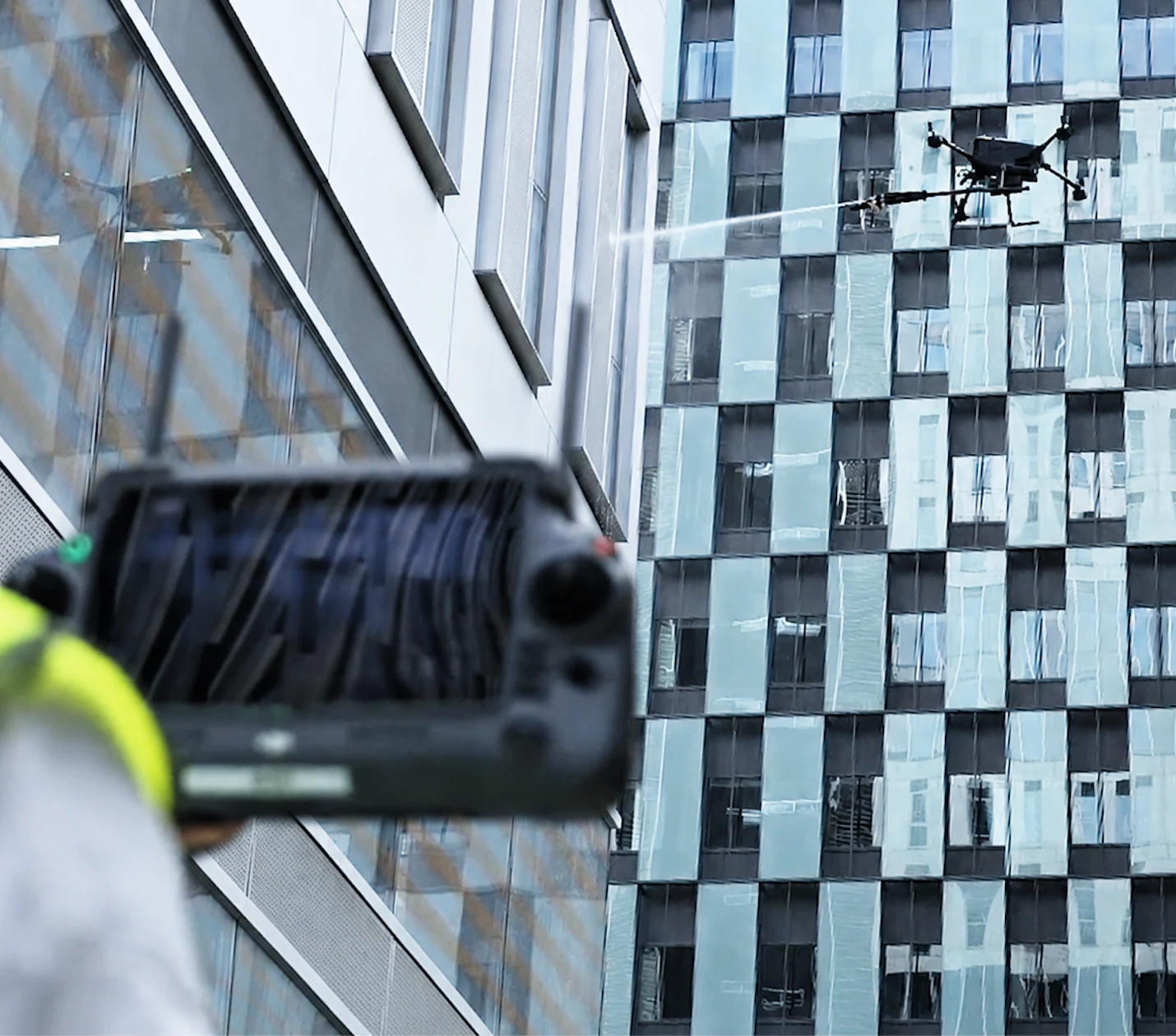
 HoverWash field footage
Flight batteries
Move between elevations and work areas with a familiar aircraft setup. Plan each sortie, battery change and charging cycle into the job.
Flexible staging with the standard power setup.
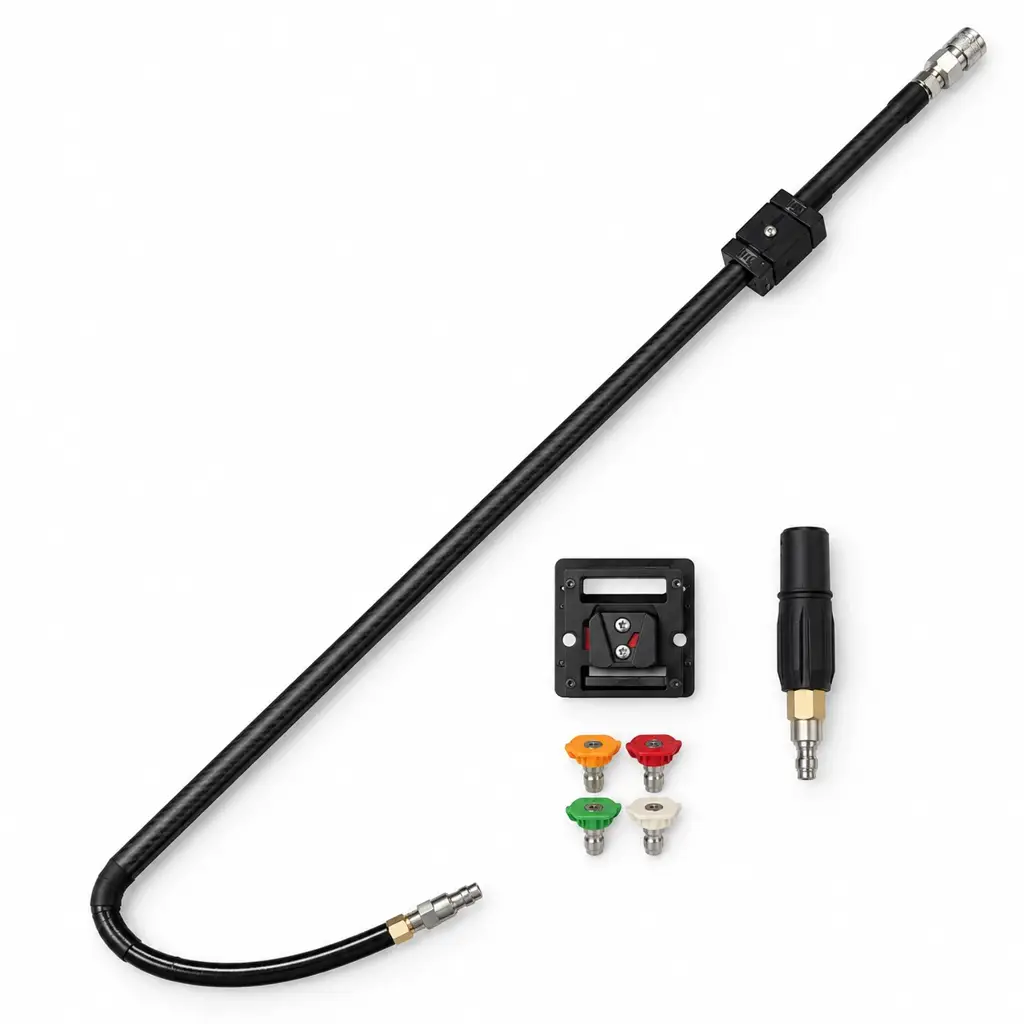
Smart lance for Matrice 400
Optional TK4 tethered power system: choose one cable length to add it to your configuration. It is not included by default; confirm the complete aircraft and wash-system setup with SkyFlow.
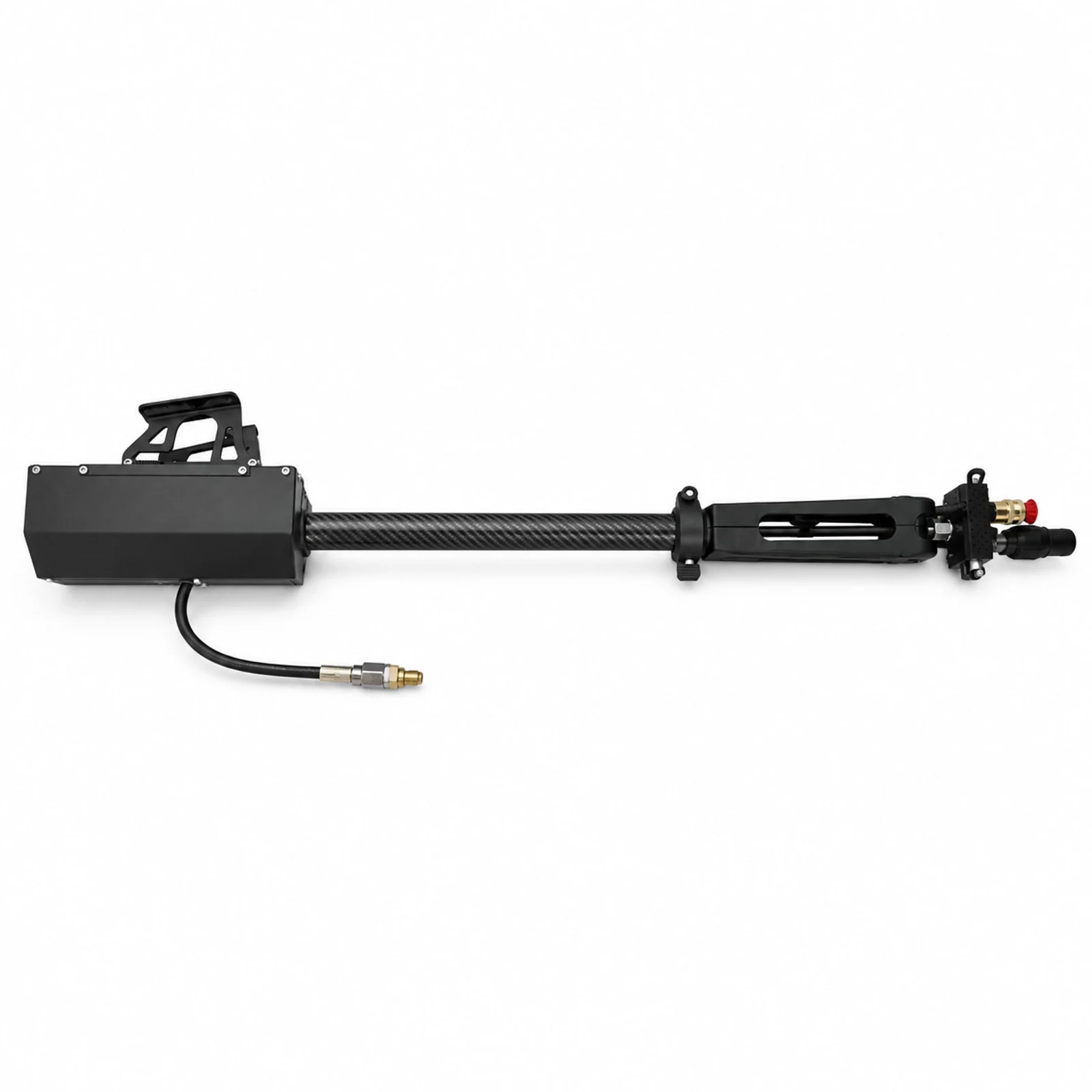
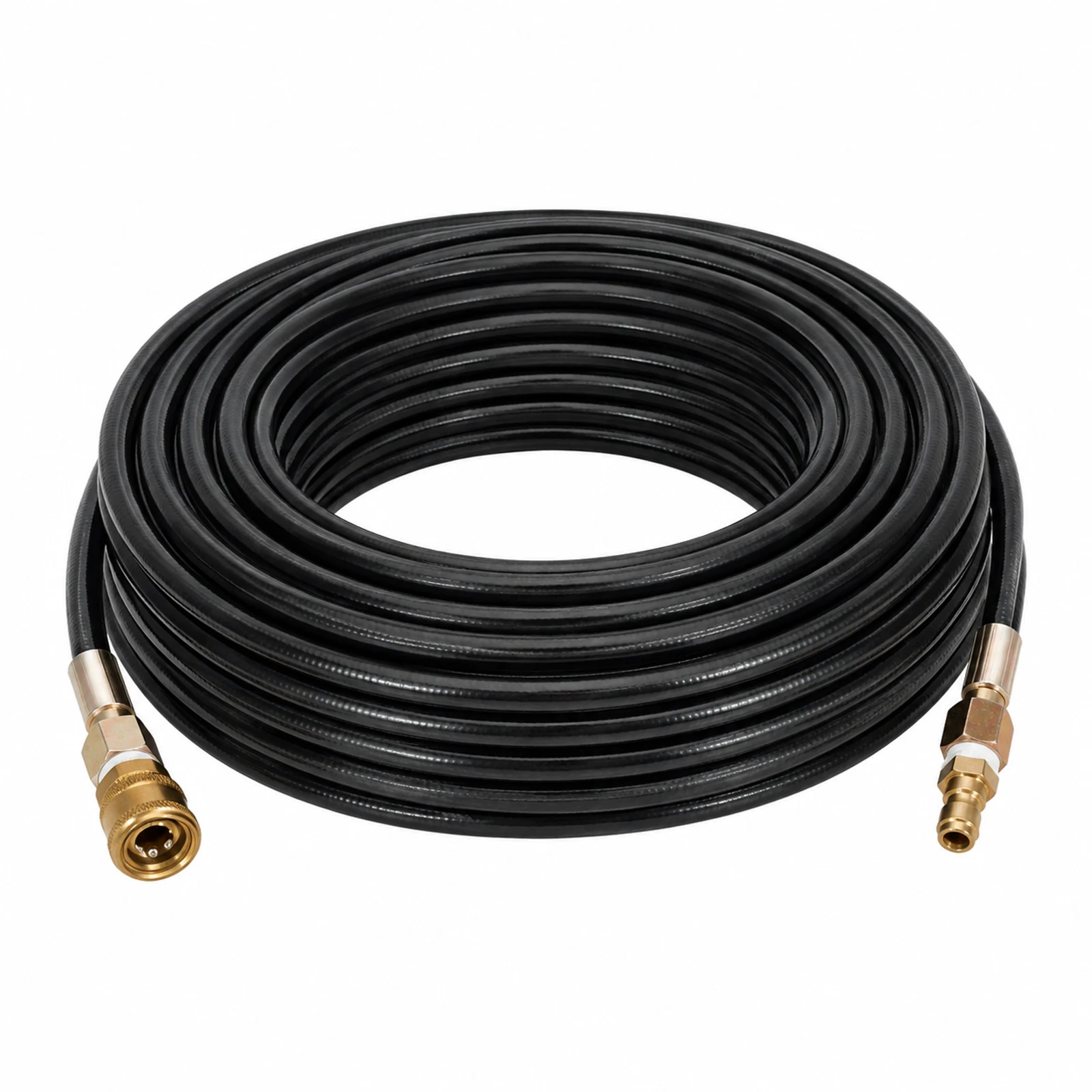
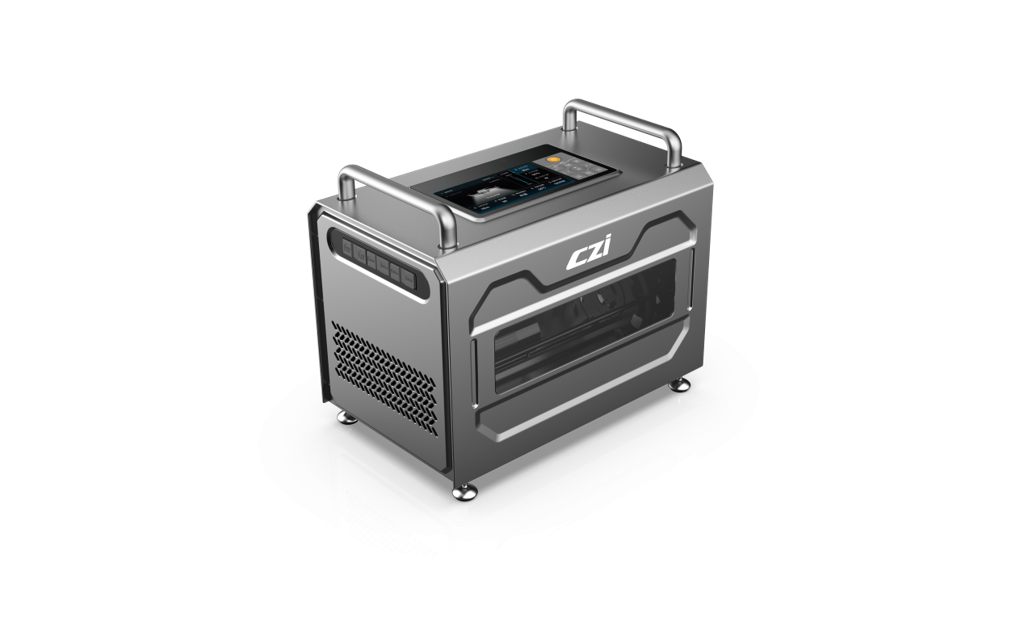
Use the Matrice 400 flight batteries for mobile work. For a planned operating area, ask SkyFlow to review an optional CZI TK4 ground power system. Both configurations still need a separate wash-water hose.
HoverWash field footageMove between elevations and work areas with a familiar aircraft setup. Plan each sortie, battery change and charging cycle into the job.
Flexible staging with the standard power setup.
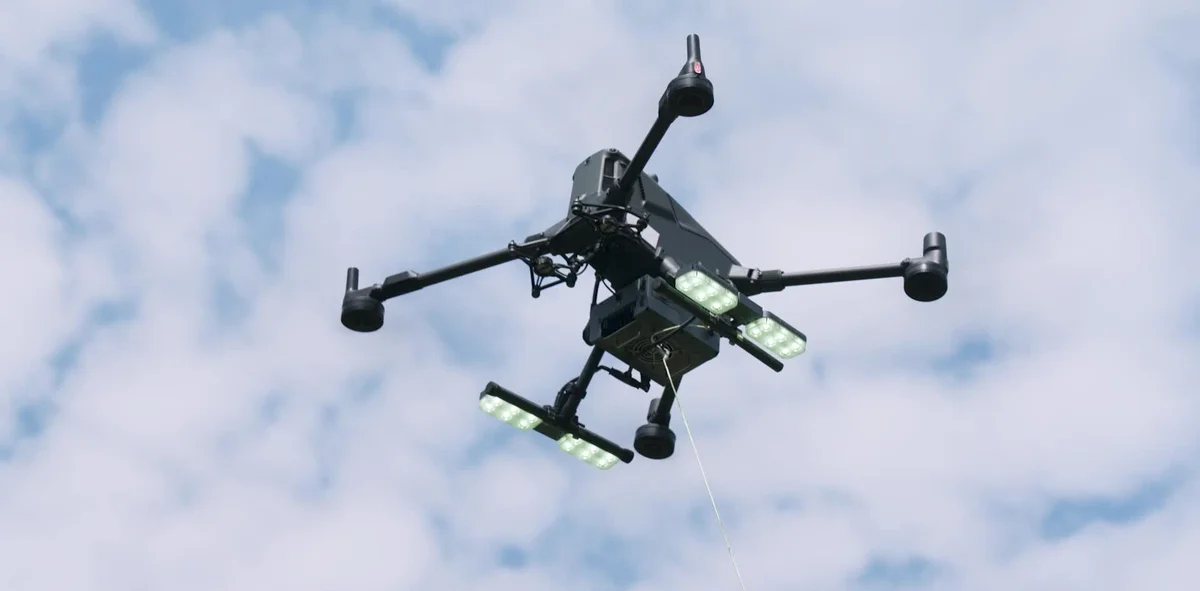 CZI TK4 tethered flight footage
A ground station supplies aircraft power through a cable. The TK4 has 110 m and 200 m options for Matrice 400, subject to a complete build and site review.
For a defined work zone with a managed power cable.
The CZI footage shows a TK4-powered aircraft; the HoverWash footage shows the washing workflow. They do not depict a validated combined TK4 + HoverWash flight. Confirm payload, connectors, site power, wind and routing of both the power tether and wash hose before ordering a combined build.
Alternatives and More Options
Alternatives and More Options
PSDK control, one-button nozzle switching, repeatable sweep and facade mission software connect the M400, airborne module and hose into one coordinated cleaning system.
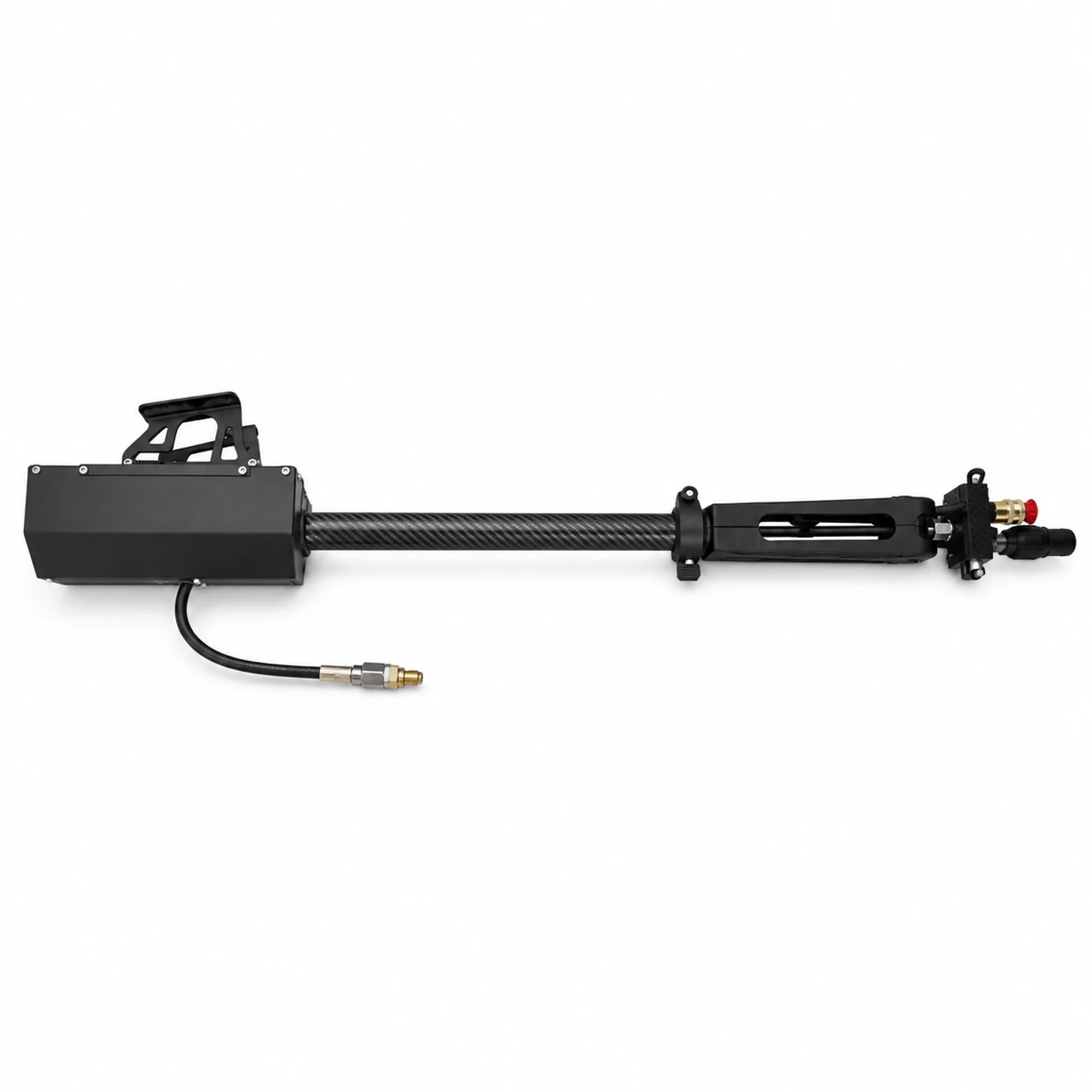
HoverWash 3 is designed around DJI Matrice 400, DJI Pilot 2 and RC Plus 2 Enterprise Enhanced. PSDK connects the payload controls to the flight workflow instead of leaving the boom as passive hardware.
Pressure and foam use separate physical nozzles. Either cleaning mode can remain fixed or run the repeatable 30° left-and-right sweep.
The supplied demonstration shows the hose-fed workflow in operation. Pump and site equipment shown are examples and are not included in the HoverWash 3 airborne kit.
From opening the case to an automatic cleaning pass, every step is designed around the aircraft, controller, hose and ground rig working as one system.
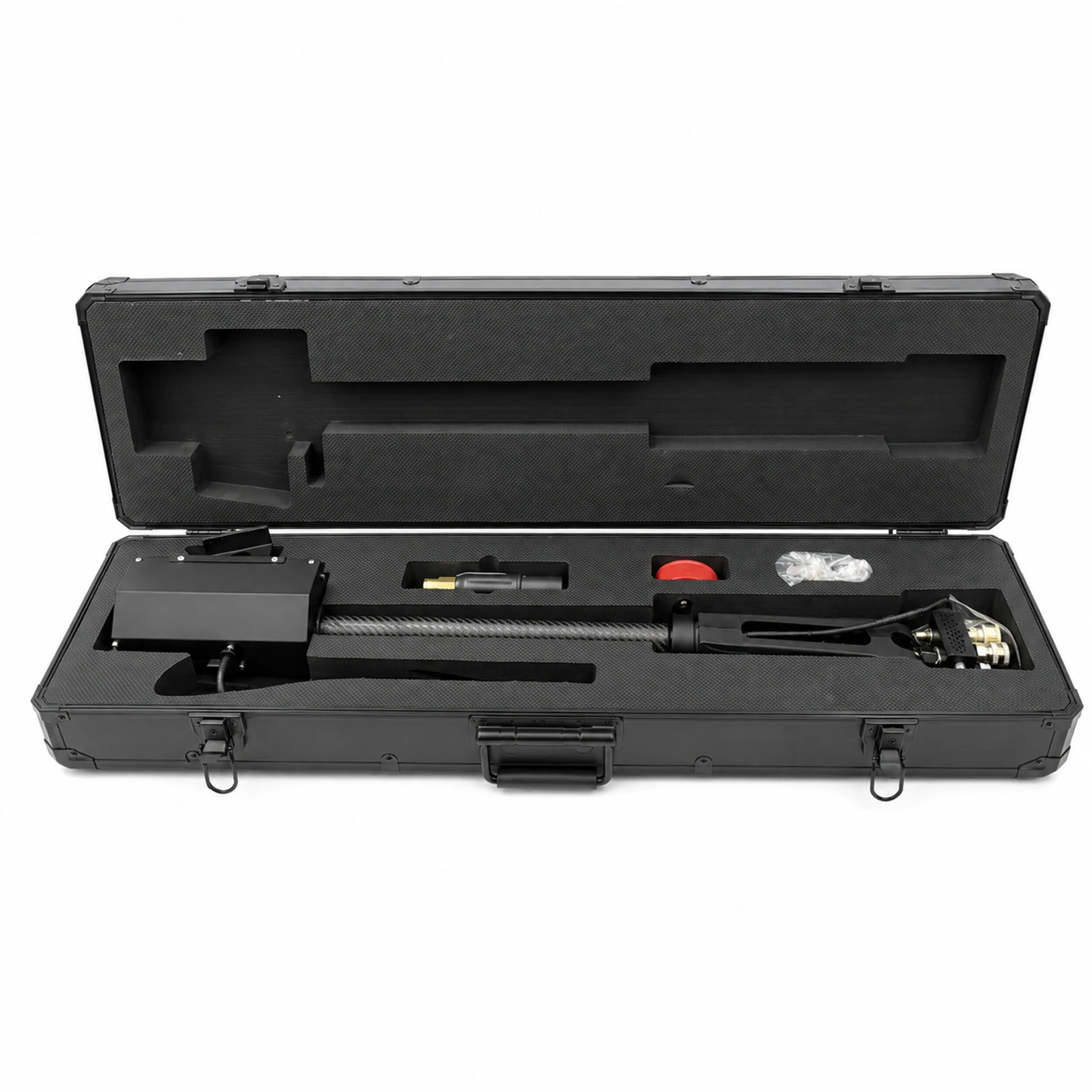
The module travels protected in its fitted hard case. Lift it out, inspect the mount and connections, and prepare the Matrice 400 before the hose is pressurized.
Fit the concentrated rinse and foam nozzles before takeoff. The dual-nozzle assembly lets the operator change cleaning modes from the controller workflow instead of landing for a manual swap.
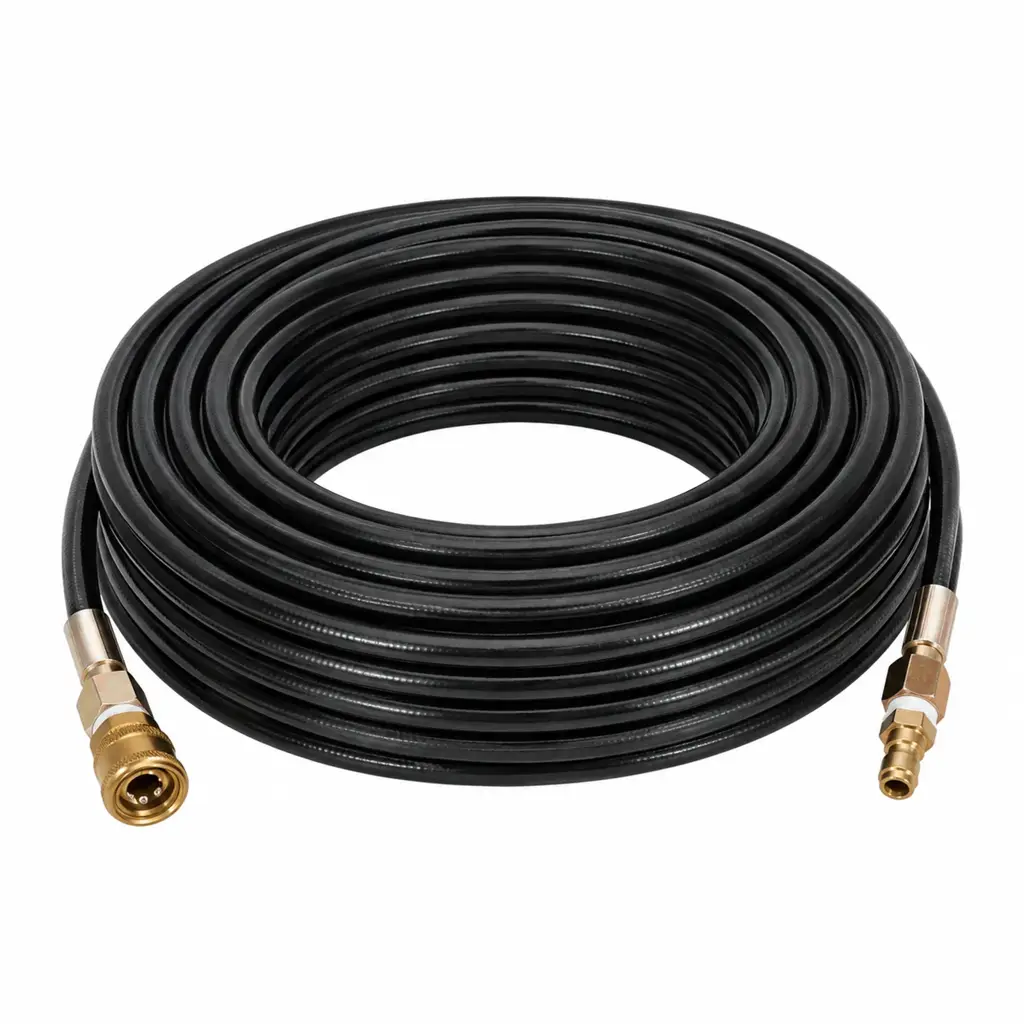
Connect the supplied ultralight hose to the selected pump system and the airborne module. Confirm every fitting, route the hose without sharp bends, and maintain clear working slack.
The head supports a 30 degree left and 30 degree right cross-sweep. Configure the washing orientation vertically or horizontally to match the facade zone and planned flight path.
Pilot-supervised A-B routes and facade missions repeat the cleaning pass while the crew monitors the aircraft, hose, site and abort plan.
HoverWash 3 coordinates two systems at once: the controller sends intent while HoverWash Rig 13 supplies flow. The airborne module turns both paths into one controlled cleaning response.
Receives the command, directs the head and delivers the selected cleaning medium.
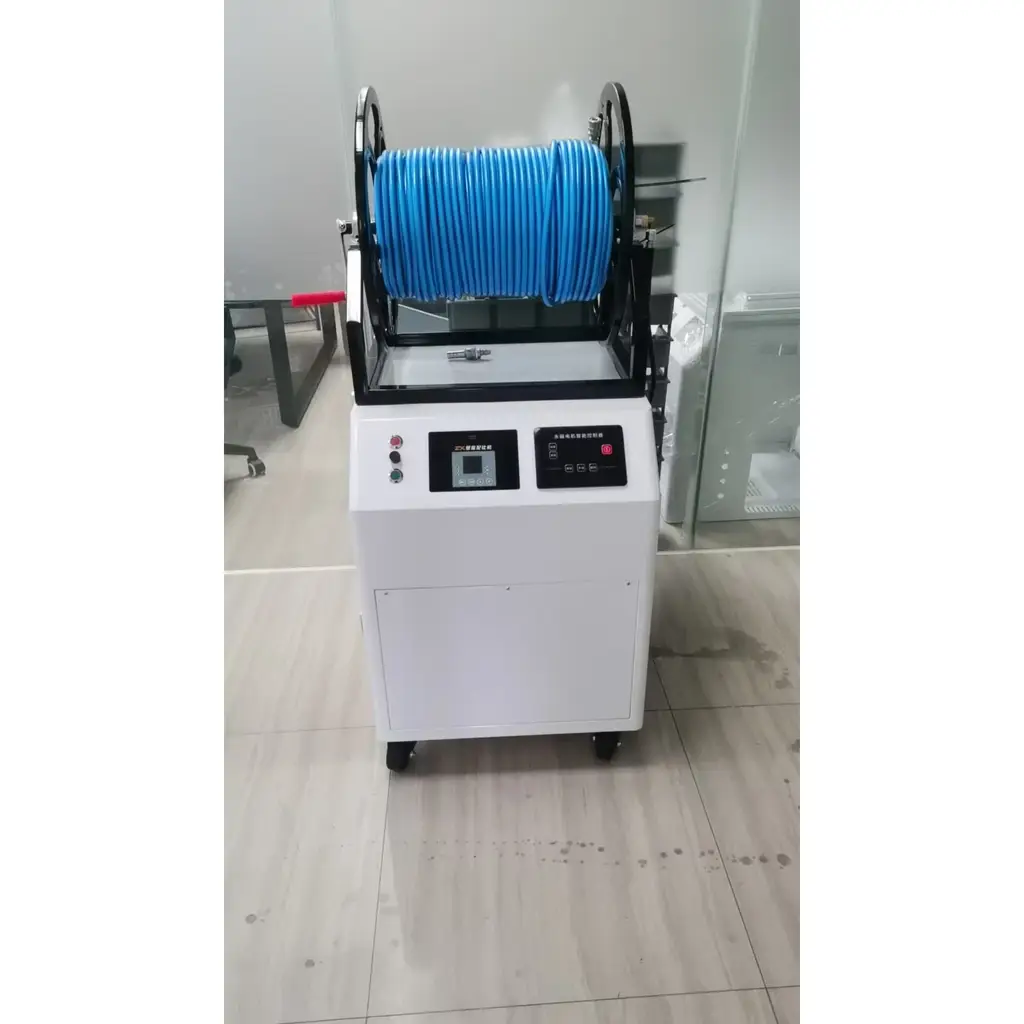
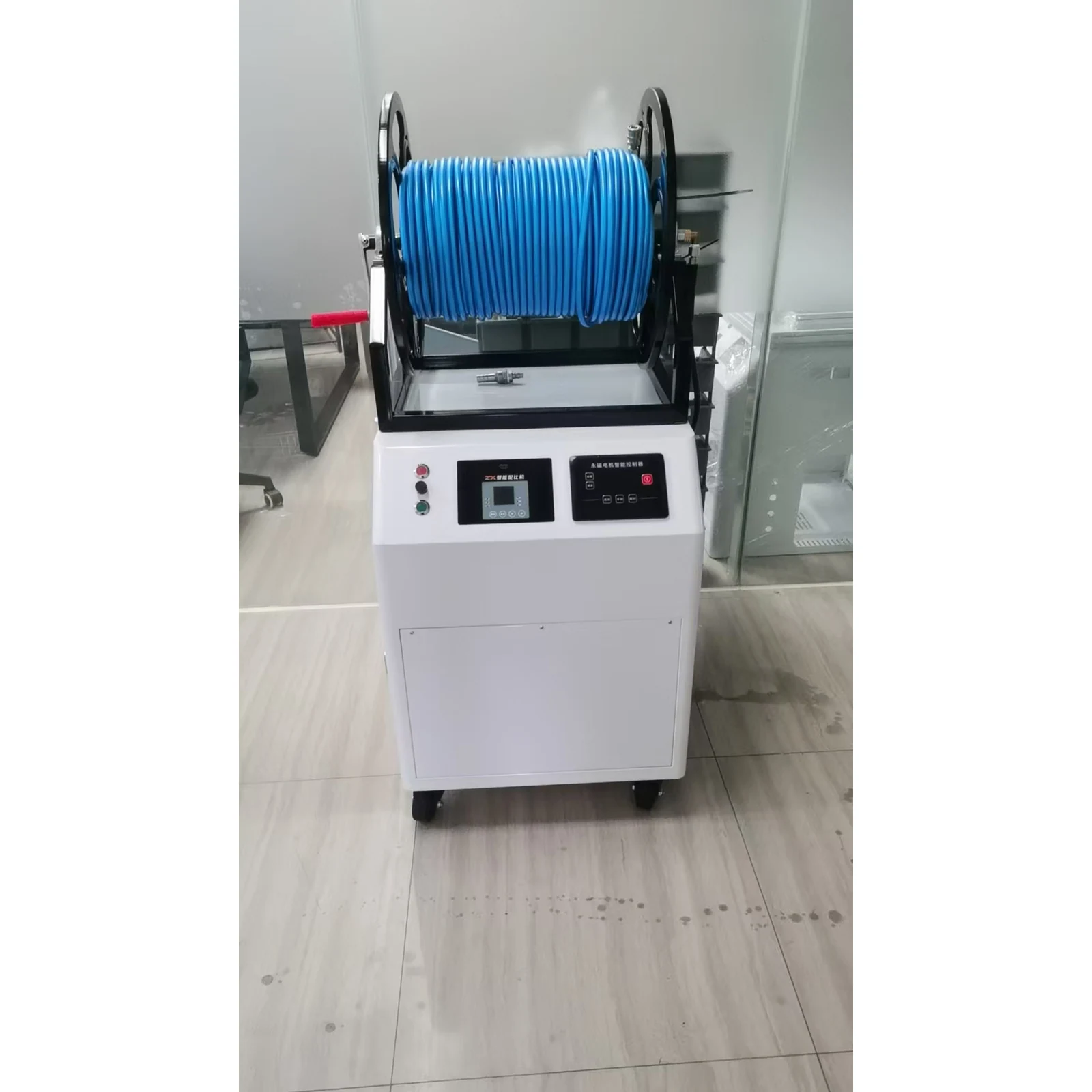
HoverWash 3 controls the cleaning action in the air. HoverWash Rig 13 supplies the matched pressure, detergent proportioning and hose management below—so crews do not have to assemble a disconnected pump setup around the aircraft.
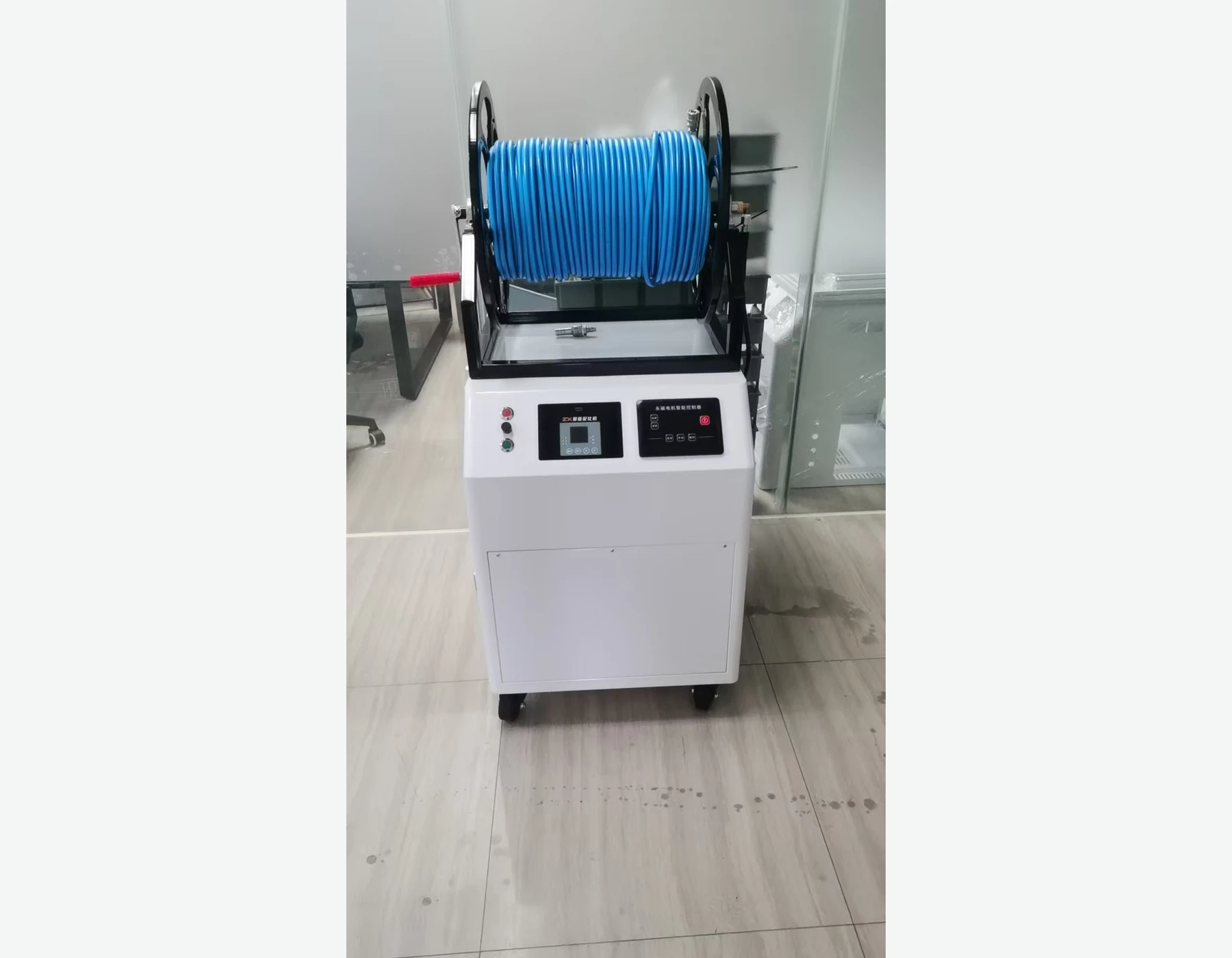
HoverWash Rig 13 prepares and manages the ground-side supply. The 200 ft ultralight line carries it to HoverWash 3, where the operator selects foam, concentrated rinse or sweep from the M400 workflow.
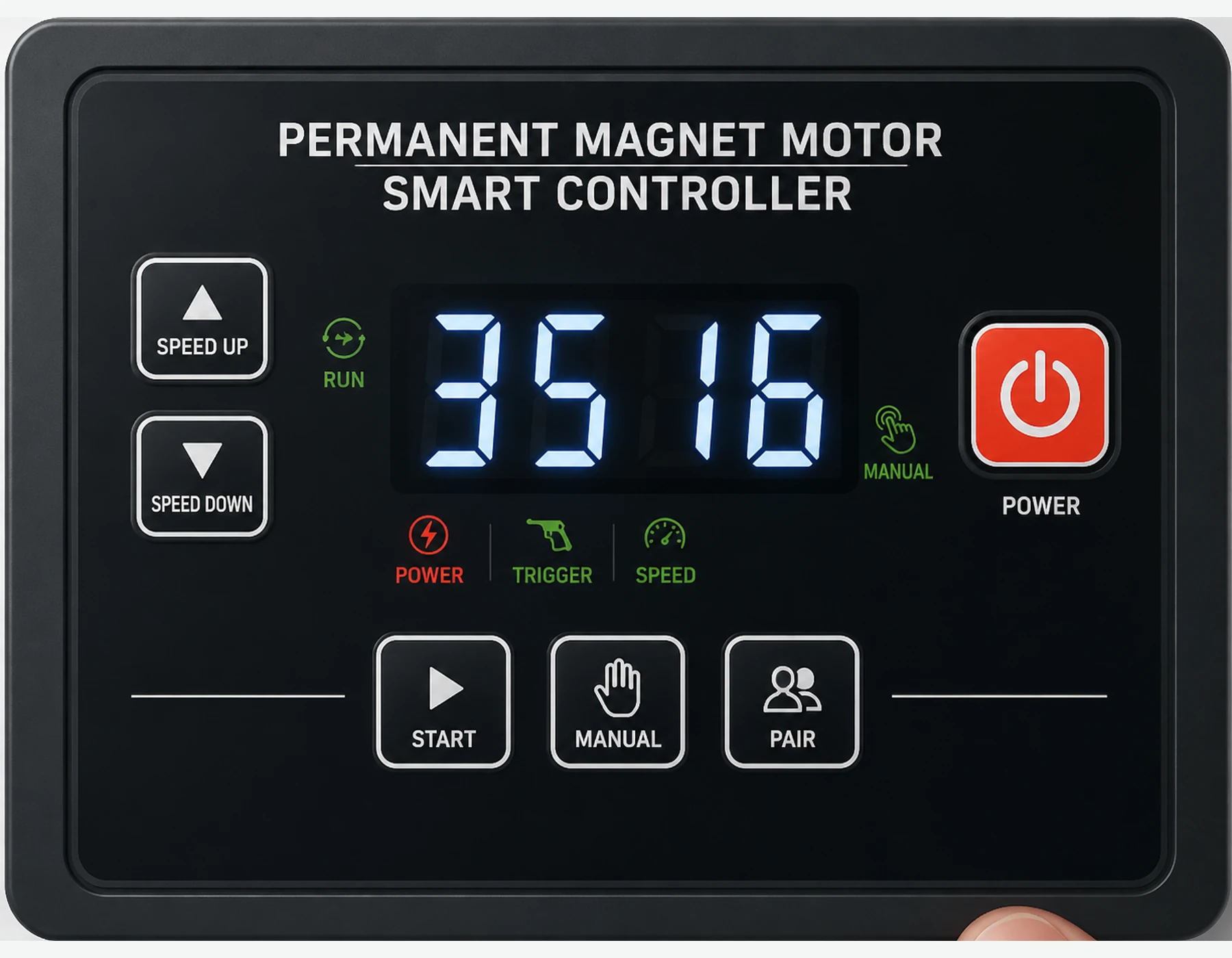
Adjust working pressure and operate the pump remotely from the rig workflow.
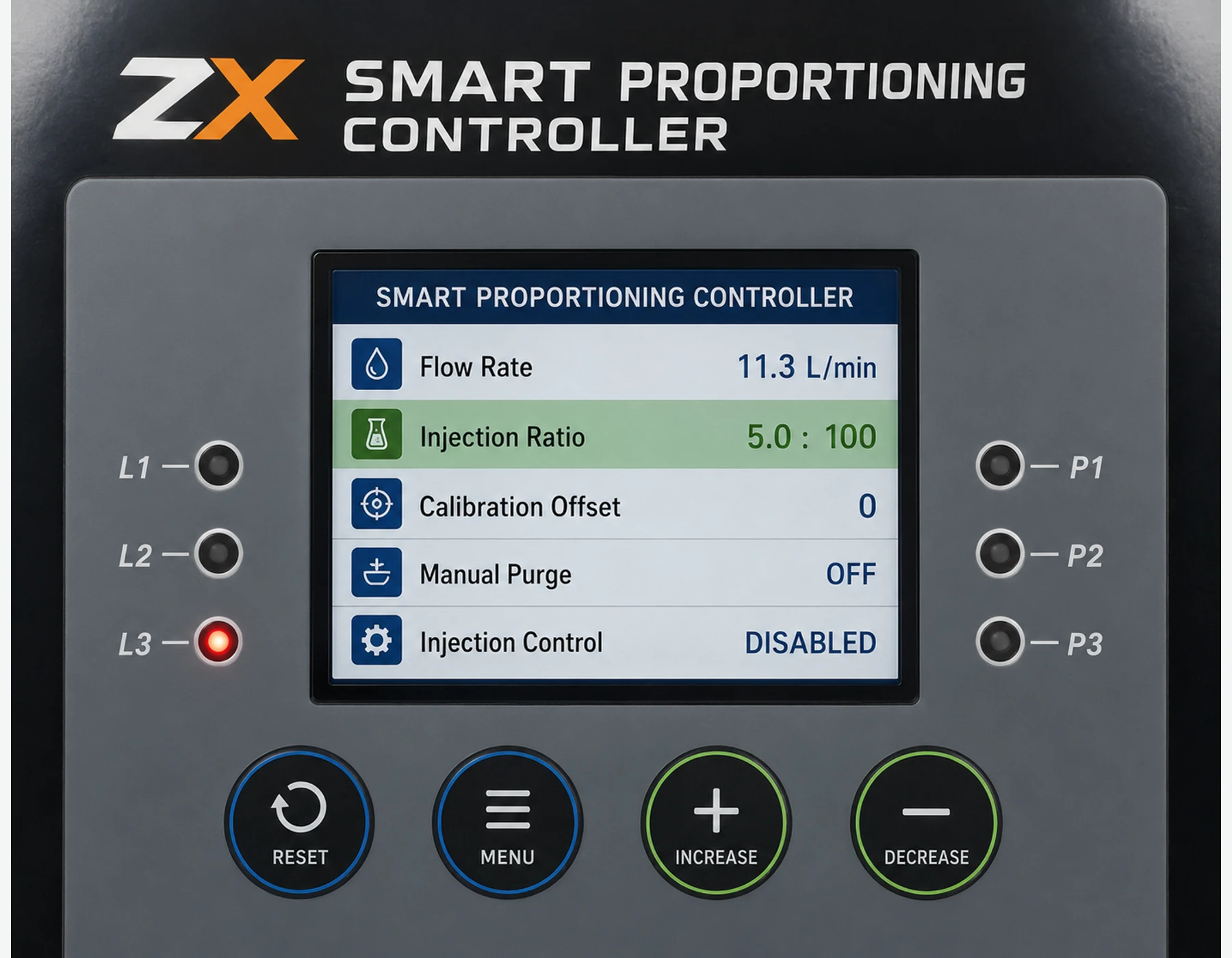
Set water flow and detergent proportioning, purge trapped air and clear the chemical line.
HoverWash Rig 13 is sold separately from the HoverWash 3 Airborne Kit. Final pressure, flow, cleaning chemistry, fittings, hose lift and surface compatibility require job-specific validation. Aircraft, airborne payload, generator, water supply and detergent are excluded unless explicitly quoted.
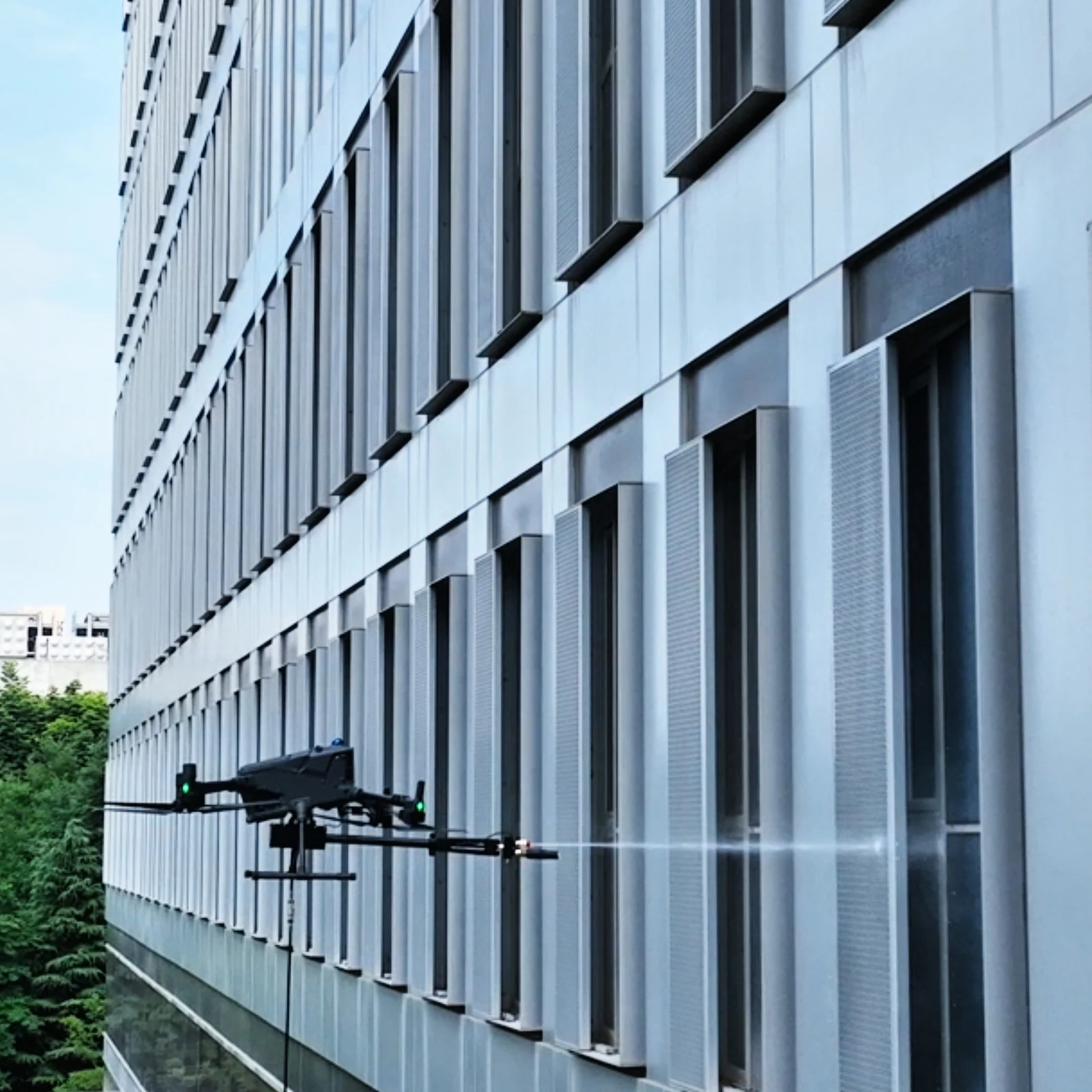
The CAD $6,630 MSRP covers the airborne cleaning kit. The Matrice 400, controller, batteries and pump remain separate so you can build around equipment you already own.
Dual-nozzle boom, PSDK controller and Matrice 400 quick-release belly mount.
One 60 m hose with the standard connection hardware.
Fitted protection for the module, nozzles and mounting hardware.
Controller integration for nozzle mode, sweep and supported mission controls.
Supplier ratings are shown for planning. Final pressure, standoff, height, chemistry and pump settings depend on the delivered configuration, target surface and approved site procedure.
HoverWash 150 prioritizes height and production on large open surfaces. HoverWash 3 prioritizes sensing, software control and access around complicated architecture. Neither is the universal answer—the site decides.
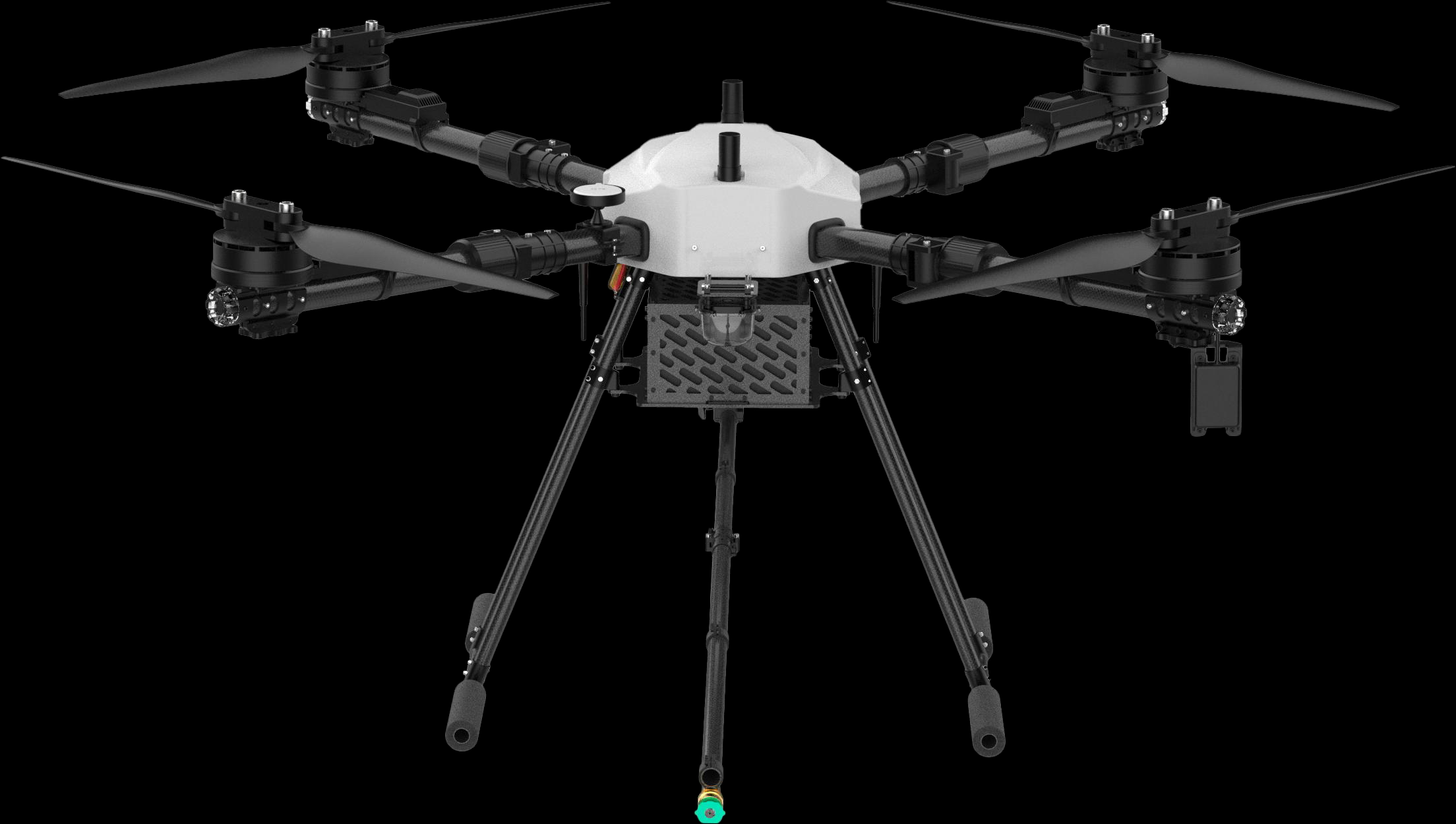
Choose height and production capacity.
Tall, broad and comparatively open surfaces where reach, flow and area-per-hour matter most.
Viewing nowChoose intelligence and geometric access.
Irregular facades, setbacks, courtyards and mixed cleaning passes where sensing and controller integration matter most.
The elevation is tall and repetitive, the operating area is relatively open, and maximizing reach or cleaning output is the primary constraint.
The architecture is irregular, GNSS may be challenged, the crew already flies M400, or foam/rinse control and repeatable sweep matter more than maximum height.
HoverWash 3 needs an integrated ground pump, detergent mixer, remote controls and organized hose management.
Planning ranges are configuration targets, not guaranteed legal or performance limits. HoverWash 150’s 400–450 ft and HoverWash 3’s 300–350 ft ranges require a validated hose, pump, weather, water, payload and site plan. DJI rates Matrice 400 for up to 6 kg at the third connector with screw-lock fastening under sea-level conditions, while its quick-release port is rated to 3 kg; payload capacity decreases with altitude. The HoverWash 3 airborne module is approximately 1.4 kg before suspended hose forces are considered. DJI also cautions that vision and obstacle sensing depend on light, texture, reflectivity and obstacle material; transparent glass and low-texture surfaces require additional care. Platform references: DJI Matrice 400 specifications and DJI Matrice 400 user manual.
Commercial planning · HoverWash 3
Start with measured area, a tested production band and a local selling rate. Then compare the airborne kit with complete M400 and ground-rig configurations.
21,528–43,056 ft²/day. Supplier planning range for HoverWash 3; validate with a representative test panel.
5,382 ft²/day, supplied as a comparison baseline—not a Canadian industry universal.
The often-quoted 7–8× result only occurs near 3,500–4,000 m²/day. Geometry, finishing, weather and hose handling can materially reduce output.
Live commercial model
Change every important assumption. The model uses contribution margin after direct job costs—not gross sales—to estimate production-day payback.
Quote × contribution margin ÷ estimated production days.
Production days at the modeled contribution—not calendar days or guaranteed recovery.
Canada benchmark
Job Bank wage medians help estimate labour—not the selling price of high-rise work. The daily equivalent below is eight hours and excludes payroll burden, training, high-rise premiums, access gear, supervision, insurance, overhead and profit.
| Province | Median / hour | 8-hour wage equivalent | Use in a quote |
|---|---|---|---|
| British Columbia BC | $20 | $160 | Starting wage input only |
| Alberta AB | $20 | $160 | Starting wage input only |
| Saskatchewan SK | $16 | $128 | Starting wage input only |
| Manitoba MB | $17 | $136 | Starting wage input only |
| Ontario ON | $19 | $154 | Starting wage input only |
| Quebec QC | $21 | $168 | Starting wage input only |
| New Brunswick NB | $18 | $140 | Starting wage input only |
| Nova Scotia NS | $18 | $144 | Starting wage input only |
| Prince Edward Island PE | $18 | $144 | Starting wage input only |
| Newfoundland and Labrador NL | $17 | $136 | Starting wage input only |
CAD $0.20/ft² appears as a lower-end high-rise discussion benchmark; published local projects are more often priced by pane, access and mobilization.
Best use: Use $0.20/ft² only as a conservative model input, then validate the actual elevation and access plan.
Toronto contractor discussionA local 2026 guide publishes CAD $0.50–$2.50/ft² for broad commercial window-cleaning work; a rope-access guide publishes $2–$4 per pane.
Best use: Treat the spread as evidence that glass type and access dominate the rate—not as a drone-cleaning tariff.
Vancouver market guideA local commercial cleaner publishes CAD $15–$25 per window for commercial glass cleaning.
Best use: Convert panes to measured cleanable area before comparing against an area-based drone quote.
Montréal commercial rate cardCredible public area rates are sparse; providers emphasize height, barriers, timing, surface and written site review.
Best use: Build from production cost and target margin, then compare the finished quote with two local contractor bids.
Calgary quoting guidanceHow to quote a wall-cleaning job
A defensible quote begins with the building, not a copied price per square foot.
Use drawings, a laser measure or a scaled orthomosaic. Record width × height for each façade zone and separate glass, metal, masonry, signage and excluded openings.
Record dust, salt, algae, grease, mineral staining and construction residue. Define whether the result is a rinse, soft wash, pressure wash or streak-controlled glass finish.
Map setbacks, recesses, overheads, airspace, people, traffic, water, drainage, anchoring, hose path and emergency landing areas before choosing the aircraft.
For HoverWash 3, model 2,000–4,000 m²/day only after a representative test panel. Use the low end for first cleans, complex geometry, frequent repositioning or detailed glass finishing.
Include flight and ground crew, mobilization, travel, water, power, chemistry, filtration, runoff control, batteries, maintenance, insurance allocation and any permit or airspace coordination.
Multiply the area rate for soil, geometry and access, add a mobilization minimum, then apply overhead and profit. Keep optional lift, rope-access or manual-detailing allowances separate.
Attach the surface test, weather limits, completion standard, water and power responsibilities, access window, public-control plan, tax and change-order conditions to the quote.
Competitive context
The relevant comparison is not “drone versus drone.” It is working height, wash method, building geometry, deployment model and the operating system around the aircraft.
Up to 150 ft, up to 4,500 psi, soft wash and pressure wash; public starting price USD $45,750.
Best comparison question: A mature North American contractor package when 150 ft covers the target building.
Up to 190 ft with included soft-wash hose, up to 4,000 psi at the pump and 8–10 GPM.
Best comparison question: Heavy industrial spraying and washing where payload and pump output matter more than compact logistics.
Filtered water, heat and moderate pressure with proprietary chemistry and a roof safety system.
Best comparison question: A managed façade-maintenance method rather than an equipment-only purchase.
Pliabot flexible-arm systems positioned for complex curtain-wall geometry and enterprise cleaning projects.
Best comparison question: Specialized contact or non-contact cleaning where a flexible aerial work arm is central to the method.
LiDAR, force sensing and AI path planning; the company positions it at roughly three times human cleaning speed.
Best comparison question: Dedicated high-rise glass programs where roof deployment and contact cleaning fit the building.
Questions buyers actually ask
These questions recur in contractor and drone-operator discussions. The answers separate physical limits, regulatory duties and commercial assumptions.
The supplier planning range is 2,000–4,000 m² per production day, equal to about 21,528–43,056 ft². Actual output depends on soil, geometry, hose lift, water delivery, flight interruptions, finishing standard and the approved operating area. Validate the rate on a representative test panel before quoting it as production capacity.
Against the supplied 500 m²/day manual baseline, 2,000–4,000 m²/day is mathematically 4–8×. The 7–8× claim applies only near 3,500–4,000 m²/day. It should not be presented as a universal result.
It can produce a strong exterior rinse, but streak-free glass depends on water purity, detergent residue, mineral load, soil, temperature, pass pattern and edge detailing. Use deionized or reverse-osmosis water where appropriate and approve a test panel before promising a finish standard.
It can if pressure, nozzle, standoff, angle or chemistry are mismatched. Every quote should identify the surface and seal condition, begin with the least aggressive effective method and require a test patch. Pressure at the pump is not the same as pressure delivered at the surface.
Matrice 400 vision positioning can assist when GNSS is weak or unavailable within DJI's published limits. Glass, repetitive textures, low light and operation above the effective vision-positioning range can reduce performance, so GNSS-challenged work still requires a validated site and abort plan.
No. A parachute can be one risk-control layer, but it does not make risk zero and does not by itself authorize flight over people. The aircraft configuration, safety assurance, pilot privileges, airspace permission, exclusion zone and operating procedures must all match the mission.
Discuss aviation-specific third-party liability and hull or equipment coverage with a qualified broker, and confirm whether the commercial general liability policy excludes aviation work. Client contracts may require limits beyond the regulatory minimum. Coverage transfers financial exposure; it does not remove operational risk.
No. Drones are strongest on accessible exterior planes where a controlled spray can reach the finish. Deep soffits, balconies, screens, bonded debris, interior glass, hand detailing, containment constraints and some public or airspace environments may still require another access method.
Aircraft payload, hose mass, water column, fitting losses, pump curve, wind, geometry and the safety plan all matter. A hose length is not a guaranteed working height. HoverWash ranges are configuration targets that require system and site validation.
Measure cleanable area, classify surface and soil, select a validated production rate, calculate direct daily cost, apply geometry and access factors, add mobilization, overhead and profit, then publish assumptions and exclusions. Do not copy a city rate without reconciling it to the actual building.
Manufacturer specifications and public pricing can change. Forum and local-provider figures are market signals, not independently audited performance or a recommended tariff. Transport Canada requirements depend on the aircraft, configuration, location and operation.
HoverWash 3 is commercial aircraft equipment. A site survey, trained flight crew, controlled ground area, hose-management plan and surface test remain part of every deployment.
HoverWash 3 For M400 is the airborne cleaning kit and software layer for DJI Matrice 400. The aircraft, RC Plus 2 Enterprise Enhanced, batteries, ground pump, water supply, generator and detergent are not included in the CAD $6,630 kit unless quoted separately.
HoverWash 3 For M400 can be configured around compatible gas or electric pressure-washer and soft-wash pumps. Pump pressure, flow, fittings, hose lift, nozzle and the target surface must be matched as one system. SkyFlow can validate a proposed pump or configure a complete HoverWash ground package.
Yes. The integrated dual-nozzle assembly is designed to switch between foam application and a concentrated water-jet mode from the M400 remote-controller workflow, without landing to change a nozzle.
The HoverWash 3 app supports pilot-supervised A-B routes and automatic facade mission workflows. The pilot remains responsible for the aircraft, separation distance, hose behaviour, obstacles, wind, people below and all pause or abort decisions.
The standard kit includes one 200 ft (60 m) ultralight high-pressure hose roll. A validated two-section configuration can extend the hose workflow to approximately 400 ft (120 m), subject to pump performance, fittings, hose management and the site plan.
Yes. SkyFlow accepts custom pump, fitting, hose-length, transport-case and operating-workflow requests. Final suitability is confirmed against the aircraft configuration, surface, chemistry and jobsite conditions.
Each package uses the published HoverWash 3 and Matrice 400 catalogue prices without a hidden bundle premium. Move up only when you need the aircraft power system or HoverWash Rig 13.
Established Matrice 400 operators with an RC Plus 2 Enterprise Enhanced and a compatible battery-and-charging workflow.
Airborne module, software, case and one 200 ft ultralight hose. Aircraft, power system and ground rig remain separate.
Teams that need the M400 and controller but already have compatible TB100 batteries and BS100 charging equipment.
Adds the M400 SP Plus Basic aircraft package. A TB100 flight battery and BS100 battery station are not included.
New airborne-cleaning crews that need the aircraft, controller, one flight battery and field charging from day one.
Adds the M400 SP Plus Ready-to-Fly package with one TB100 battery and one BS100 intelligent battery station.
Companies building a complete commercial facade-cleaning capability instead of integrating a separate pump system.
Combines the advanced M400 package with HoverWash Rig 13’s pump, mixer and integrated hose management.
Prices are CAD MSRP before tax and shipping. The Basic M400 package requires compatible flight batteries and charging equipment before operation. Water supply, generator, detergent and site-specific fittings are quoted separately unless explicitly included.