
4.10.1 Stick Modes
PDF p. 79When using the remote controller to operate the aircraft, you need to know the current stick mode of the remote controller and fly with caution. PDF p. 79
Three stick modes are available, that is, Mode 1, Mode 2 (default), and Mode 3. PDF p. 79
Mode 1
PDF p. 80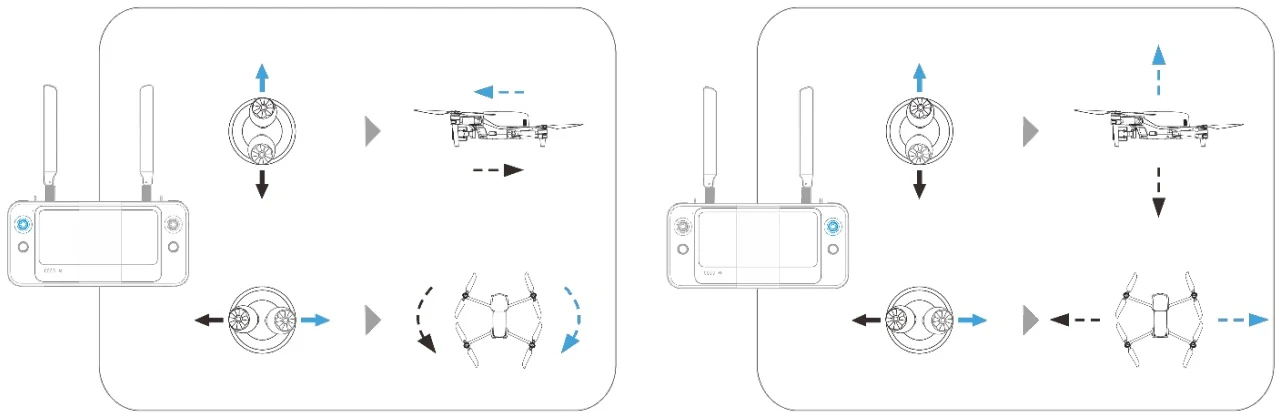
| Stick | Move Up/Down | Move Left/Right |
| Left Command Stick | Controls the forward and backward movement of the aircraft | Controls the heading of the aircraft |
| R C Stiogicmhktmand | Controls the ascent and descent of the aircraft | Controls the left or right movement of the aircraft |
View the original table / diagram
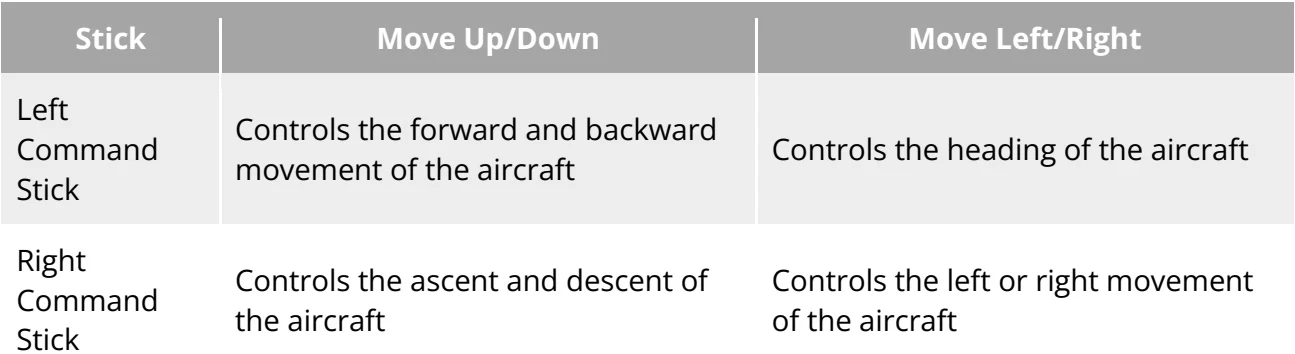
Mode 2
PDF p. 80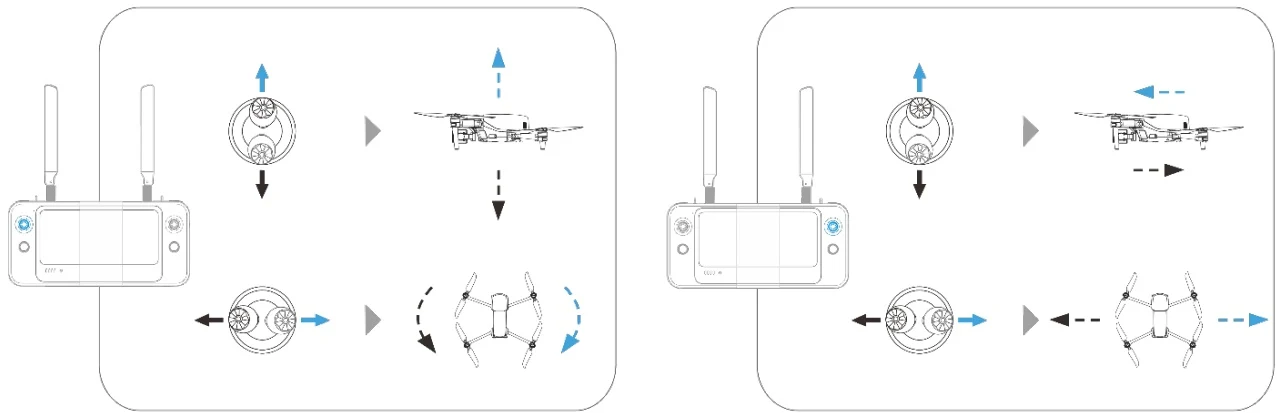
| Stick | Move Up/Down | Move Left/Right |
| Left Command Stick | Controls the ascent and descent of the aircraft | Controls the heading of the aircraft |
View the original table / diagram

Right Command Stick PDF p. 81
Controls the forward and backward movement of the aircraft PDF p. 81
Controls the left or right movement of the aircraft PDF p. 81
Mode 3
PDF p. 81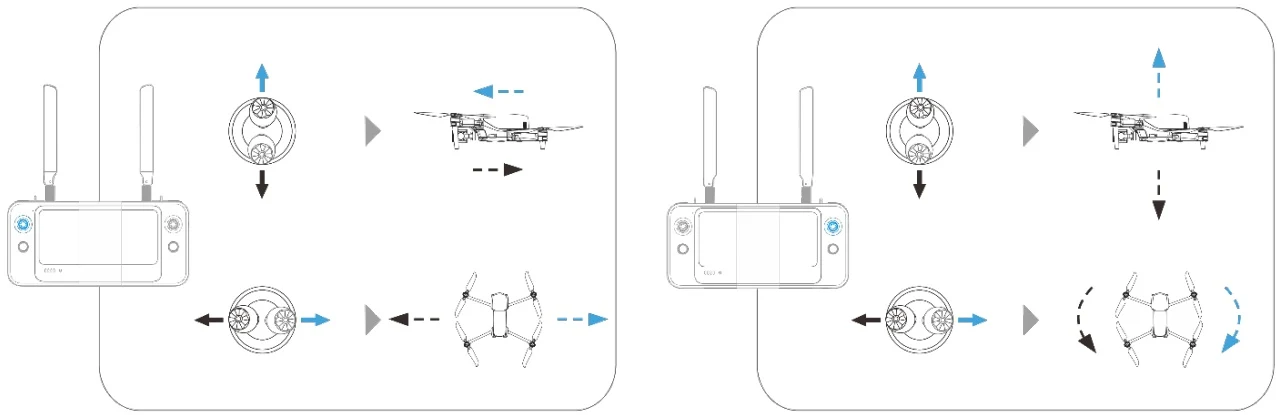
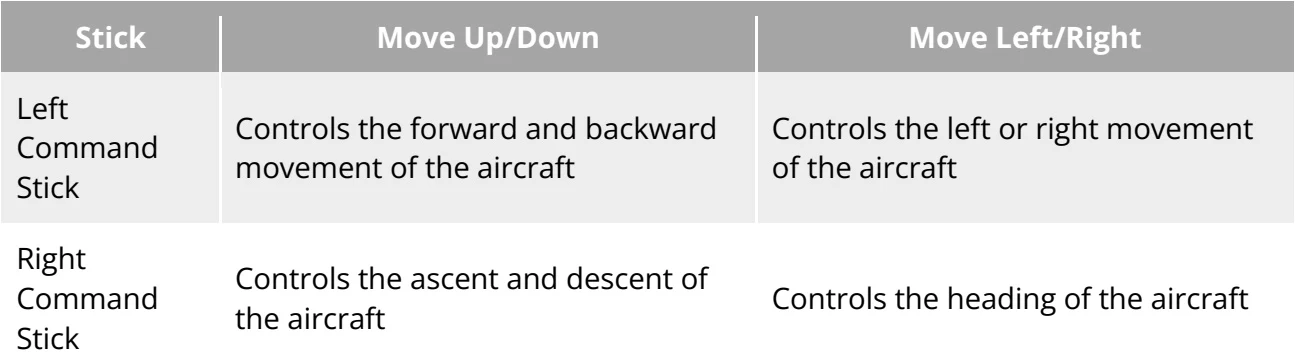
| Stick | Move Up/Down | Move Left/Right |
| Left Command Stick | Controls the forward and backward movement of the aircraft | Controls the left or right movement of the aircraft |
| Right Command Stick | Controls the ascent and descent of the aircraft | Controls the heading of the aircraft |
View the original table / diagram
Warning
PDF p. 81Do not hand over the remote controller to persons who have not learned how to use the remote controller. PDF p. 81
If you are operating the aircraft for the first time, please keep the force gentle when moving the command sticks until you are familiar with the operation. PDF p. 81
The flight speed of the aircraft is proportional to the degree of the command stick movement. When there are people or obstacles near the aircraft, please do not move the stick excessively. PDF p. 81
4.10.2 Setting Stick Mode
PDF p. 81The default stick mode of the remote controller is "Mode 2". Its detailed responses are as follows. For operation responses of other stick mode, you can also refer to the following description. PDF p. 81
| Mode 2 | Aircraft Flight Status | Control Method |
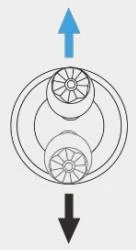
| Left Command StickMove Up or Down | 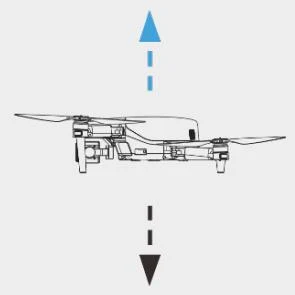 | 1. The up-and-down direction of the left stick is the throttle stick, which is used to control the vertical lift of the aircraft.2. Push the stick up, and the aircraft will rise vertically; pull the stick down, and the aircraft will descend vertically.3. When the stick is returned to the center, the altitude of the aircraft remains unchanged.4. When the aircraft takes off, please push the stick up to above the center, and the aircraft can lift off the ground. |
 | ||
| Left Command StickMove Left or Right | 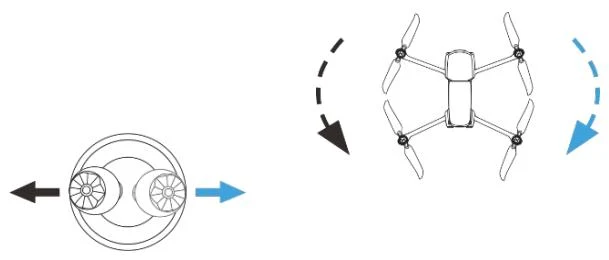 | 1. The left-and-right direction of the left stick is the yaw stick, which is used to control the heading of the aircraft.2. Push the stick to the left, and the aircraft will rotate counterclockwise; push the stick to the right, and the aircraft will rotate clockwise.3. When the stick is returned to the center, the rotational angular velocity of the aircraft is zero, and the aircraft does not rotate at this time.4. The larger the degree of the stick movement, the greater the rotational angular velocity of the aircraft. |
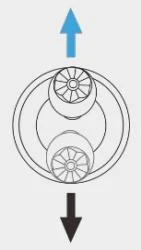 | 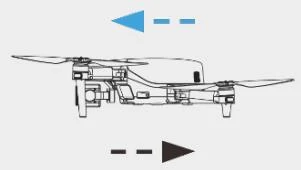 | 1. The up-and-down direction of the right stick is the pitch stick, which is used to control the flight of the aircraft in the forward and backward directions.2. Push the stick up, and the aircraft will tilt forward and fly towards the front of the nose; pull the stick down, and the aircraft will tilt backward and fly towards the tail of the aircraft.3. When the stick is returned to the center, the aircraft remains horizontal in the forward and backward directions.4. The larger the degree of the stick movement, the faster the flight speed of the aircraft, and the larger the tilt angle of the aircraft. |
View the original table / diagram
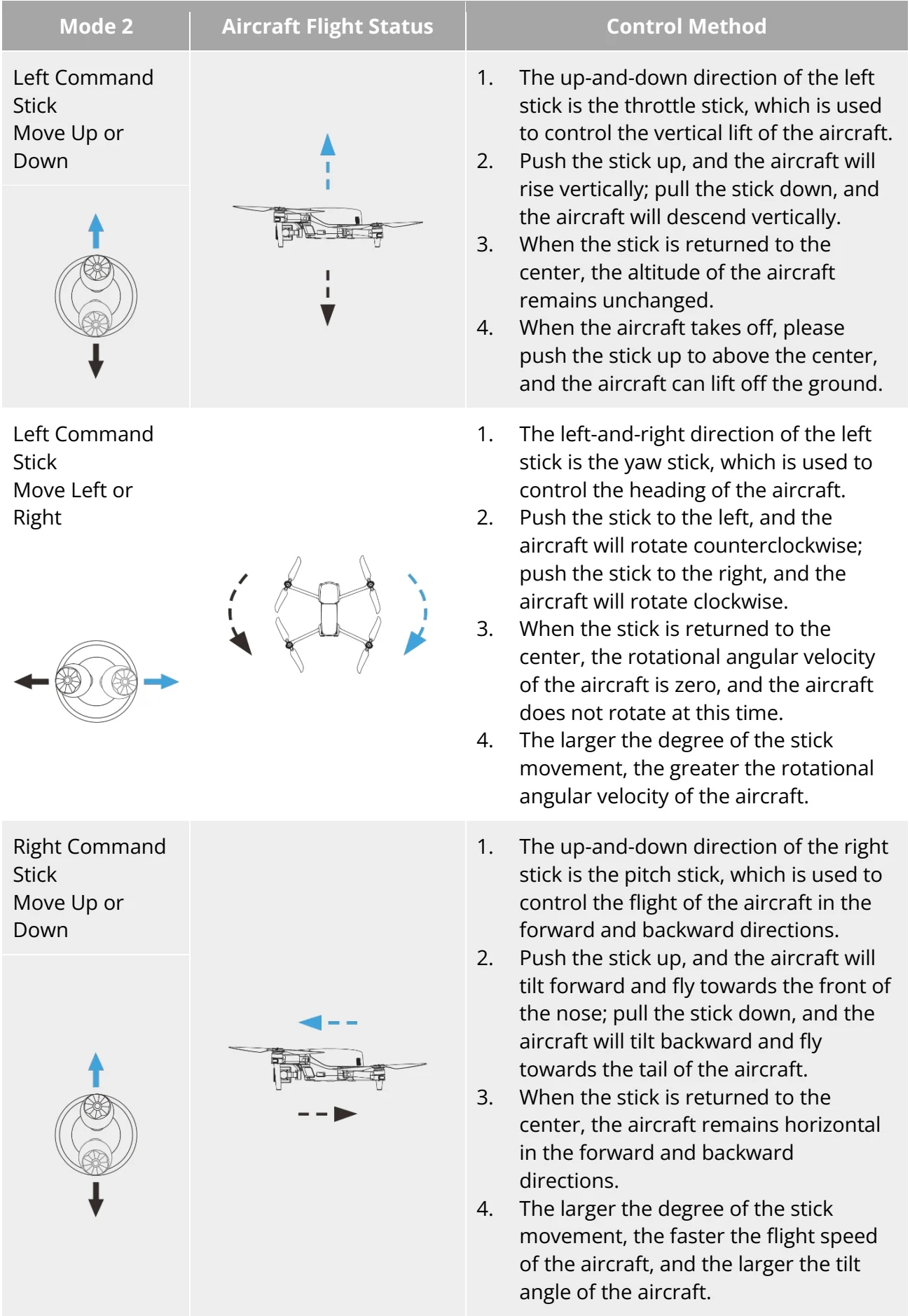
Right Command Stick Move Left or Right PDF p. 83
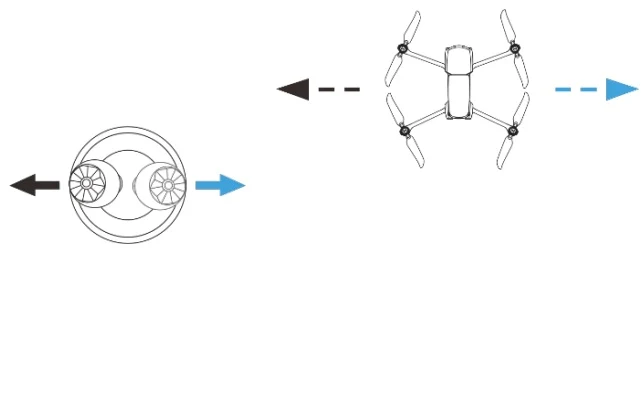
1. The left-and-right direction of the right stick is the roll stick, which is used to control the flight of the aircraft in the left and right directions. PDF p. 83
2. Push the stick to the left, and the aircraft will tilt to the left and fly to the left of the nose; pull the stick to the right, and the aircraft will tilt to the right and fly to the right of the nose. PDF p. 83
3. When the stick is returned to the center, the aircraft remains horizontal in the left and -right directions. PDF p. 83
4. The larger the degree of the stick movement, the faster the flight speed of the aircraft, and the larger the tilt angle of the aircraft. PDF p. 83

Remarks
PDF p. 83When controlling the aircraft for landing, pull the throttle stick down to its lowest position. In this case, the aircraft will descend to an altitude of 1.2 meter above the ground, and then it will perform an assisted landing and automatically descend slowly. PDF p. 83
4.10.3 Starting/Stopping the Aircraft Power Motor
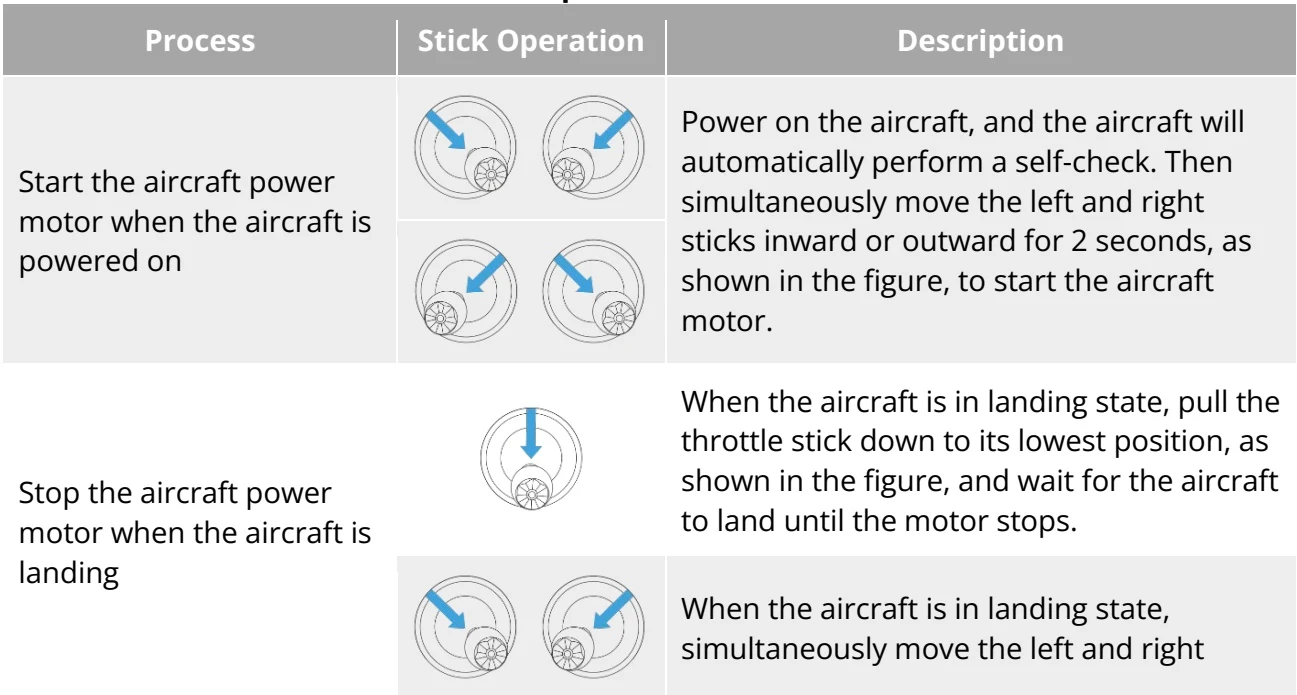
PDF p. 83| Process | Stick Operation | Description |
| Start the aircraft power motor when the aircraft is powered on | 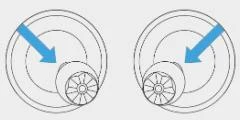 | Power on the aircraft, and the aircraft will automatically perform a self-check. Then simultaneously move the left and right sticks inward or outward for 2 seconds, as shown in the figure, to start the aircraft motor. |
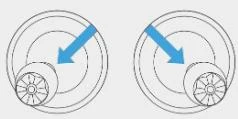 | ||
| Stop the aircraft power motor when the aircraft is landing | 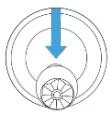 | When the aircraft is in landing state, pull the throttle stick down to its lowest position, as shown in the figure, and wait for the aircraft to land until the motor stops. |
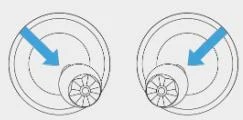 | When the aircraft is in landing state, simultaneously move the left and right |
View the original table / diagram
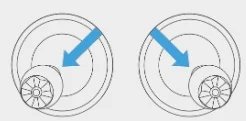
sticks inward or outward, as shown in the figure, until the motor stops. PDF p. 84